Does Your Inner West Terrace Need Arc Fault Detection (AFDD) Protection?
Does your Inner West terrace need arc fault detection, known as AFDD protection, and what does it actually do? An AFDD is a device fitted at your switchboard that detects dangerous electrical arcing inside damaged or deteriorating wiring and switches the circuit off before it can start a fire. AFDDs are not compulsory in Australia, but AS/NZS 3000 specifically flags older wiring, timber construction and circuits being altered during a renovation as situations where fitting one is genuinely worth considering, which describes a huge number of Inner West terraces.
⚡ Quick Answers: Arc Fault Detection (AFDD) for Inner West Terraces
- What does an AFDD actually protect against? It detects arcing faults, meaning sparking caused by damaged cables, loose terminals or deteriorated insulation, that ordinary circuit breakers and safety switches are not designed to catch.
- Is AFDD protection compulsory in NSW homes? No. AS/NZS 3000 does not require AFDDs in Australian installations, so fitting one is a choice you make with your electrician, not a mandatory upgrade.
- Can a safety switch or circuit breaker do the same job as an AFDD? No. Safety switches detect current leaking to earth and circuit breakers detect overload or short circuit current, but neither reliably picks up the kind of sporadic, lower level arcing that causes many electrical fires.
- Why does an old Inner West terrace come up so often in this conversation? Ageing cable insulation, decades of small alterations, timber framing and a history of vermin activity in wall and subfloor spaces are exactly the conditions AS/NZS 3000 identifies as good candidates for AFDD protection.
- Where does an AFDD get installed? At the switchboard, on the specific final subcircuit it is protecting, alongside your existing circuit breakers and safety switches rather than replacing them.
- Does adding an AFDD mean rewiring the whole house? No. An AFDD is fitted at the switchboard itself, so it protects the existing wiring on that circuit rather than requiring the cabling to be replaced first.
1. What an arc fault actually is
An arc fault is dangerous sparking inside your wiring, caused by things like a damaged conductor, a loose or corroded terminal connection, or insulation that has cracked and let two conductors touch intermittently. AS/NZS 3000 recognises two types: a series arc, which happens within a single damaged or broken conductor under load, and a parallel arc, which jumps between two conductors or between a live conductor and an earthed part. Both generate intense, localised heat exactly where you cannot see it, inside a wall cavity, under a floor, or behind a switchboard.
This matters because arcing current does not behave like a simple overload or a short circuit. It can be intermittent, low in magnitude compared to what trips an ordinary breaker, and still hot enough over time to ignite surrounding timber, insulation or dust.
2. Why your existing safety switch and circuit breakers are not enough on their own
A residual current device, which most people call a safety switch, is designed to detect current leaking to earth and cut power fast enough to prevent electric shock. A standard circuit breaker is designed to detect sustained overload or a solid short circuit. Neither of these devices is built to recognise the specific signature of an arcing fault, which is exactly why AS/NZS 3000 treats AFDD protection as a separate, additional layer rather than something your existing protection already covers. An AFDD is purpose built to recognise the electrical signature of both series and parallel arcing and disconnect the circuit before the heat generated has a chance to start a fire.
3. Why this comes up so often with older terrace wiring
AS/NZS 3000 specifically notes that AFDD protection is worth considering in premises with combustible construction materials, such as the timber framing found throughout Federation, Californian bungalow and Victorian terrace housing across the Inner West, and in situations where existing wiring may have significantly deteriorated. Decades old cable insulation naturally becomes brittle, past renovations often mean several generations of patched in wiring behind the walls, and a history of possums or rodents in the roof or subfloor is common in older terrace stock. Any one of these conditions on its own is a reason to think about AFDD protection, and plenty of Inner West properties have more than one at once.
If your own terrace still has sections of original wiring from before the 1980s, it is worth reading alongside our guide on old wiring in Federation and Californian bungalow homes, which covers how to tell whether your cabling is approaching the end of its safe working life.
4. When an alteration or renovation is the natural trigger
You do not need to rewire an entire terrace to add AFDD protection. Under AS/NZS 3000 Clause 2.9.5, AFDDs should be considered when alterations are being carried out to final subcircuits in situations where the existing wiring system may have significantly deteriorated, which makes almost any renovation, switchboard upgrade or new circuit addition a sensible moment to raise the question with your electrician. If you are already having work done, for example during a switchboard upgrade or a kitchen or bathroom renovation that touches existing circuits, adding AFDD protection to the circuits being altered is a straightforward addition rather than a separate, disruptive project of its own.
5. Where an AFDD actually sits in your switchboard
An AFDD is installed at the switchboard from which the final subcircuit it protects originates, sitting alongside your existing circuit breakers and safety switches rather than replacing the whole board. It must carry a load current rating no lower than the circuit's existing protective device and comply with the relevant product standard, so it is matched to the specific circuit it is protecting rather than being a generic, one size fits all add on. This also means AFDD protection can be rolled out gradually, circuit by circuit, starting with whichever areas of your home carry the oldest wiring or the highest risk, rather than needing to be done for the entire property in one go.
6. Which circuits are usually prioritised first
AS/NZS 3000 points to premises with sleeping accommodation and locations with combustible construction materials as typical candidates for AFDD protection, which in practice means bedroom circuits are often the sensible starting point in a terrace, alongside any circuit known to run through roof or subfloor spaces with a history of vermin activity. Living areas and circuits feeding older lighting runs are also commonly prioritised, particularly where a rewireable fuse board has already been identified as overdue for replacement.
7. How this fits with a broader switchboard or safety check
AFDD protection is best considered as part of a wider look at your terrace's overall electrical condition rather than in isolation. An electrical safety inspection can identify which circuits are carrying the oldest wiring, where safety switch coverage has gaps, and whether your switchboard has the physical space and capacity to add AFDDs alongside everything else already installed. For many older Inner West properties, AFDD protection ends up being one item on a short list that also includes updated safety switch coverage and a genuine power supply upgrade where the overall board is simply full.
How High Demand Electrical Helps
High Demand Electrical is a licensed local team, not a call centre, servicing terraces, semis and apartments right across Sydney's Inner West. We treat AFDD protection as a genuine, practical option worth raising on the right jobs, particularly on older timber framed terraces where we are already working on the switchboard or a specific circuit, rather than pushing it as a blanket upsell on every job. If you want an honest view on whether your own wiring and switchboard make you a good candidate, our team can assess the actual condition of your circuits during a standard safety inspection and recommend AFDD protection only where it genuinely adds value.
AFDD and Arc Fault Protection FAQs (Sydney)
Is AFDD protection the same thing as a safety switch?
No. A safety switch, technically a residual current device, protects against electric shock from current leaking to earth, while an AFDD protects against fire caused by arcing inside the wiring itself. Most compliant modern installations use both, not one instead of the other.
Do I need AFDD protection if my terrace already has a new switchboard?
Not necessarily. A newer switchboard does not automatically mean the wiring running out to every room has been replaced, so the age and condition of the cabling itself is usually the bigger factor. See our guide to switchboard upgrades for how board age and wiring age are assessed separately.
Can I add an AFDD to just one circuit, or does it have to cover the whole house?
You can add AFDD protection to a single circuit at a time, which is exactly why it suits a gradual, priority based approach rather than an all or nothing upgrade.
Does AFDD protection cost a lot to add during a renovation?
The cost depends on how many circuits you want protected and the condition of your existing switchboard, so it varies property to property. It is worth asking for AFDD protection as a line item on any renovation or switchboard upgrade quote rather than assuming it automatically adds a large amount to the job.
Will an AFDD cause nuisance tripping on old wiring?
A correctly selected and installed AFDD, matched to the right circuit, should not nuisance trip under normal use. If an older circuit does trip repeatedly once protected, that is usually telling you something genuine about the condition of the wiring behind it, which is worth investigating rather than simply removing the protection.
For a broader look at general Level 2 Accredited Service Provider standards and electrical safety across Sydney, our main site's guide to knob and tube and other legacy wiring types covers the oldest end of the wiring age spectrum this article touches on, alongside general Level 2 electrician services across Sydney.
Not sure whether your Inner West terrace's wiring is a good candidate for AFDD protection? Get an Electrical Safety Inspection Quote from High Demand Electrical, or call us on 0402 559 777. Every job starts with a proper assessment of your switchboard and circuits, since the right protection for your property can only be confirmed once we have seen it in person.
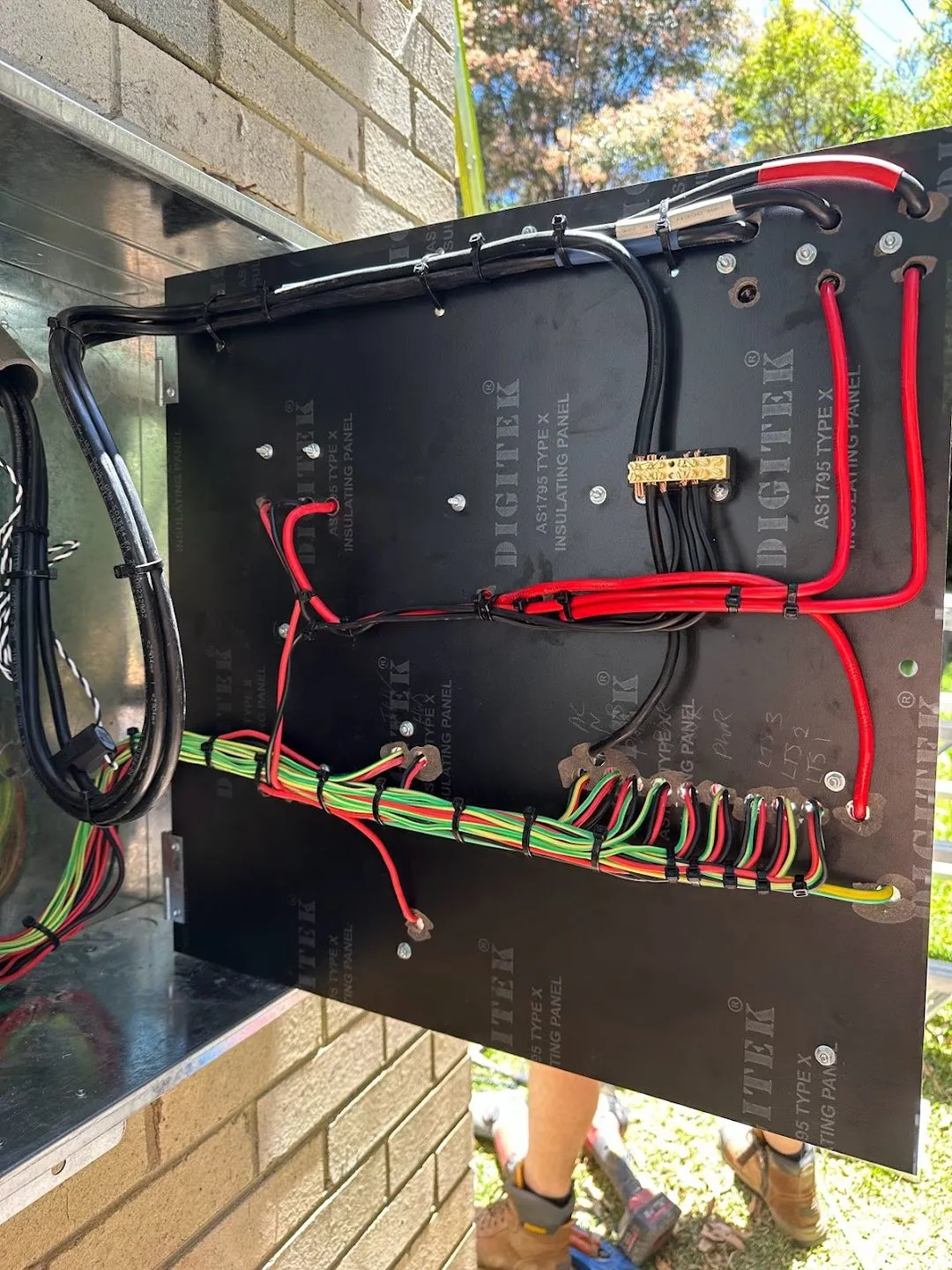
Powering Your Needs with Expertise
If you want a reliable, experienced, and prompt electrician, High Demand Electrical Inner West is the one to call. We cover every electrical need — routine maintenance, emergency repairs, full system installs — and our team is focused on keeping your setup running smoothly. Small task or big project, give us a ring today.

Licensed Level 2 ASP electricians across the Inner West and Sydney. Same-day service and 24/7 emergency response.
Licence 397193C
ABN 87 051 836 527