Does Your Inner West Home or Business Need CT Metering? The 100 Amp Threshold Explained
Does your Inner West home or business need CT metering? Once your demand tops 100 amps per phase, or goes above what a standard meter is rated for, your Metering Coordinator can require current transformer metering instead of an ordinary whole current meter. For most Inner West homes this is still a long way off, but it's a real threshold worth understanding once you start adding EV charging, induction cooking, ducted air conditioning or a commercial fitout to an older terrace, semi or shopfront's existing supply.
⚡ Quick Answers: CT Metering and the 100 Amp Threshold
- What is CT metering? Current transformer metering measures your electricity use indirectly through transformers rather than passing your full load straight through the meter, which is how larger demands are measured safely and accurately.
- What triggers the switch from a standard meter? Once your current exceeds 100 amps per phase, or your meter's own current rating, your Metering Coordinator may require CT metering at their discretion.
- Does every Inner West home need to worry about this? No. A typical single phase terrace or semi sits well under this threshold even after a switchboard upgrade. It mostly becomes relevant for larger electrification projects, multi tenancy buildings and commercial premises.
- Who decides if I need CT metering? The Metering Coordinator, an entity registered with the Australian Energy Market Operator responsible for your metering installation, makes the call, not your electrician alone.
- Does CT metering cost more to install? Generally yes, since it requires dedicated current transformers, a sealable or lockable isolation device, and compliant switchboard space, on top of the metering equipment itself.
- Can going all electric push a terrace over this line? It's unlikely on its own for a single dwelling, but it becomes a genuine question for larger terraces converted to multiple tenancies, cafes, shops and bigger commercial fitouts.
1. Whole current metering versus CT metering
Most Inner West homes run on whole current metering, where your full electrical load passes directly through the meter. It's simple, cheap and perfectly adequate for the demand a standard household, even a well electrified one, actually draws. CT metering works differently: current transformers sit on the supply and effectively scale your load down to a level the meter can measure safely, which is how much larger demands get metered without an oversized meter sitting in your switchboard.
The rules draw the line where current exceeds 100 amps per phase, or the current rating of a meter for separately metered parts of an installation. Past that point, your Metering Coordinator may require CT metering to be installed, at their discretion rather than automatically.
2. Where this actually shows up in the Inner West's housing stock
A single dwelling terrace or semi, even one we've helped go fully electric with induction cooking, heat pump hot water and EV charging, almost never approaches 100 amps per phase on a standard single phase supply. This threshold starts to matter in different situations: a walk up apartment block or strata building with a shared main switchboard carrying the combined demand of many units, a commercial property upgrading to a larger three phase supply, or a shop or cafe fitout with heavier cooking and refrigeration loads on one connection.
It's also relevant to a property fed by its own separate connection with a private pole, which is worth checking against our sister site's guide on who pays to extend the network to a private power pole, since a bigger load and a longer supply run can both push a connection towards needing more than a standard meter can handle.
3. What CT metering actually involves on your switchboard
CT metered installations need a sealable or lockable isolation device on the line side of the current transformers, so each tariff or customer can be isolated independently. An appropriately rated circuit breaker is a suitable device for this, but it has to sit in the right place in the switchboard design, not be retrofitted as an afterthought. This is one of the reasons a CT metering upgrade is rarely a simple swap, it usually means reworking part of your main switchboard layout to give the current transformers and isolation gear proper space and access.
If your building also uses controlled load tariffs, such as off peak hot water, a separate contactor arrangement applies on top of the CT metering itself, with its own wiring and sealing requirements. This is worth raising early with whoever is coordinating your metering, since it changes what has to be planned into the switchboard rebuild.
4. The Metering Coordinator's role, and why it isn't your electrician's call alone
A Metering Coordinator is registered with the Australian Energy Market Operator and holds overall responsibility for appointing a Metering Provider and Metering Data Provider at your connection point, and for the ongoing management, access and security of your metering installation. Whether you actually need CT metering, once you're near the threshold, is their discretionary decision under the rules, informed by your actual or planned demand, not something a switchboard upgrade alone can quietly sidestep.
This is part of why we flagged the Metering Coordinator's role in our townhouse and villa meter box placement guide as well, since more complex medium density sites often need this conversation started earlier rather than left until the switchboard work is already underway.
5. What to do if you think you're approaching the threshold
If you're planning a renovation, a strata switchboard replacement, or a commercial fitout that will meaningfully increase your connected load, it's worth having your actual and planned demand assessed properly before committing to a standard switchboard upgrade. A proper load calculation, not a guess, is what tells you whether you're genuinely close to 100 amps per phase or have real headroom left.
For most single dwellings this will come back comfortably under the threshold even after electrification, which is good news, but strata buildings, shopfronts and anything with a shared main switchboard deserve a proper check rather than an assumption either way.
Why it's Level 2 ASP work
Any work that touches your connection point, your main switchboard's metering arrangement, or coordination with the Metering Coordinator and your distributor sits with a Level 2 Accredited Service Provider, not a standard electrical licence alone. High Demand Electrical Inner West holds this accreditation, which is what lets us assess whether your project is genuinely approaching the CT metering threshold and manage the switchboard and metering changes end to end if it is.
How High Demand Electrical helps
We're a licensed local team, not a call centre, servicing homes, strata buildings and shopfronts across the Inner West, including Newtown, Marrickville, Leichhardt, Balmain, Annandale, Glebe and Petersham. Before we recommend any switchboard upgrade on a larger property, we'll do a genuine load assessment rather than assuming, so you're not caught out partway through a project discovering CT metering is suddenly required. See our switchboard upgrades service for how we scope this properly from the start.
CT Metering FAQs (Sydney)
Is CT metering only for commercial properties?
No, though it's far more common there. Any installation, residential or commercial, that genuinely exceeds 100 amps per phase or its meter's rating can be required to move to CT metering, which is why larger strata buildings and multi tenancy terraces are worth checking too.
Will my electricity bill change if I move to CT metering?
CT metering measures your usage, it doesn't change your tariff structure by itself. Any bill impact would come from your actual consumption and tariff plan, not from the metering method. See our going all electric switchboard capacity guide for how rising demand is actually assessed.
Can I avoid CT metering by splitting my load across circuits?
Splitting circuits doesn't reduce your total demand, which is what the 100 amp per phase threshold actually measures. A genuine demand management review, done properly before a switchboard upgrade, is the right way to confirm where you actually sit.
Who installs the current transformers and isolation gear?
Your Level 2 ASP coordinates this with your Metering Provider, since the switchboard side of the work and the metering equipment itself are typically handled by different parties working to the same design. See our electrical safety inspections service if you're not sure where your current switchboard stands.
Does my network, Ausgrid or Endeavour Energy, change any of this?
The 100 amp threshold and Metering Coordinator framework apply statewide, though each distributor and Metering Coordinator can have their own process details. Check your network area in seconds with our postcode checker if you're not sure which network applies to your property.
Get a Switchboard Upgrade Quote
Get a Switchboard Upgrade Quote or call 0402 559 777 to talk through your property's actual demand before assuming a standard switchboard upgrade is all you need. Every job still needs a proper site assessment before we can confirm exact scope or pricing.
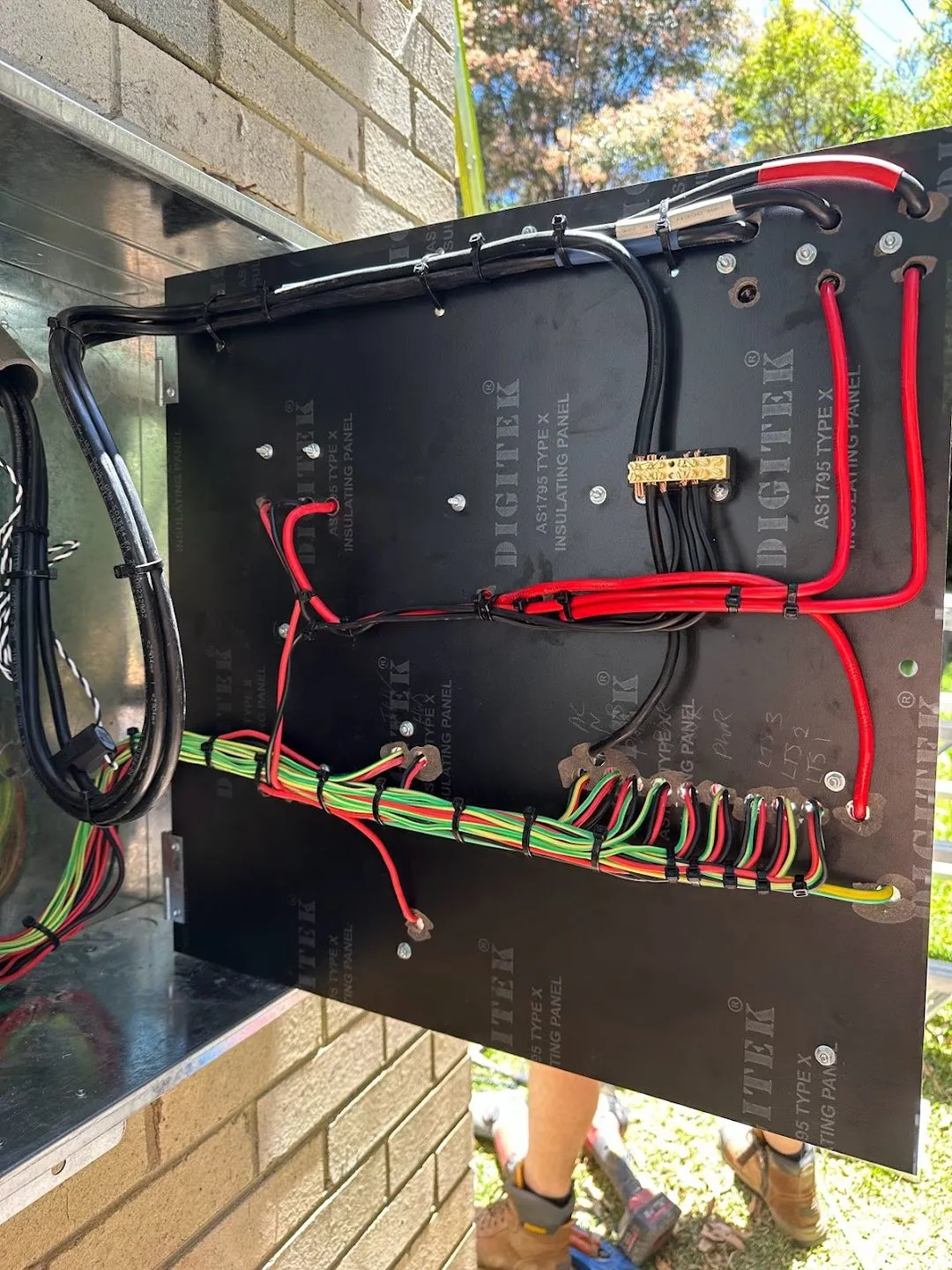
Powering Your Needs with Expertise
If you want a reliable, experienced, and prompt electrician, High Demand Electrical Inner West is the one to call. We cover every electrical need — routine maintenance, emergency repairs, full system installs — and our team is focused on keeping your setup running smoothly. Small task or big project, give us a ring today.