Can You Just Plug an EV Charger Into a Normal Power Point in Your Inner West Home?
Can you just plug your EV charger into a normal power point at home? Not for everyday charging. The wiring rules specifically prohibit installing a socket outlet for that kind of casual, ongoing charging, called Mode 1, so a proper home setup in your Inner West terrace or apartment needs its own dedicated circuit, a specific safety switch and a charger or outlet mounted at the right height instead.
1. Why you can't just use an existing power point
It is a common assumption, plug the car in overnight the same way you would a kettle, and the charging lead that comes with most electric vehicles seems to invite exactly that. AS/NZS 3000 says otherwise. The standard specifically prohibits installing a socket outlet for Mode 1 charging in a residential installation, which is the basic arrangement of a charging lead plugged into an ordinary general purpose outlet with no extra protection built in beyond what that circuit already has.
The concern is current draw held at a high level for hours at a time, every night, on a circuit and an outlet that were designed for occasional, short duration loads rather than sustained vehicle charging. A loose or worn general purpose outlet that would never cause a problem running a vacuum cleaner for twenty minutes can overheat badly under eight hours of continuous near maximum draw.
2. Mode 1, 2, 3 and 4 charging explained
Mode 1 is the basic case already covered above and is not permitted as a dedicated residential charging setup under the Australian rules. Mode 2 uses a charging lead with its own built in control and protection electronics, plugged into a dedicated circuit and outlet rated specifically for that purpose, typically giving a modest but genuinely safe top up. Mode 3 and 4 charging use a fixed wall mounted charging unit wired directly into its own circuit, which is the setup most Inner West homeowners actually want once they look past the cable that came in the car's boot, since it charges faster and removes the lead itself as a point of failure.
Whichever mode you choose, the final subcircuit feeding it is not allowed to supply any other socket outlet or point in the house. It is a dedicated, single purpose circuit from the switchboard to the charging point and nothing else.
3. The Type B safety switch rule
Every Mode 2, 3 or 4 EV charging circuit needs its own residual current device, commonly called a safety switch, and it has to be a Type B device rated at a maximum of 30 milliamps. This is a meaningfully different requirement to the standard Type A safety switch protecting the rest of your home.
An onboard EV charger can, under some fault conditions, produce a smooth DC leakage current rather than the alternating current fault a standard safety switch is built to detect. A Type A device can fail to trip on that kind of fault, which is exactly why the rules single out EV charging circuits for the more capable Type B protection rather than leaving it to a standard safety switch shared with the rest of the switchboard.
4. Circuit size and mounting height requirements
Mode 2 charging needs a final subcircuit with a minimum current carrying capacity of 20 amps. A fixed Mode 3 or 4 charger needs at least 32 amps on a single phase supply, along with its own isolating switch rated at a minimum of 32 amps so the unit can be safely isolated for servicing. Either way, the socket outlet or the charger's output connection has to be mounted at least 800 millimetres above the floor or the ground it sits on, which matters as much for keeping the connection clear of a garden hose or a puddle in a rear laneway as it does for ease of use.
For a charger mounted in a garage, carport or rear lane position without cover, that height rule sits alongside the general weatherproofing requirements we cover in our guide to outdoor powerpoint weatherproofing rules, since an EV charging point exposed to the weather needs the same IP rated enclosure any other outdoor point does.
5. Why older Inner West terraces usually need a switchboard upgrade too
A dedicated 20 or 32 amp circuit needs a spare, correctly rated way on the switchboard, and most Inner West terraces and semis simply do not have one sitting idle. Older switchboards here were typically built for a handful of lighting and power circuits decades before anyone expected a single appliance to draw this much current for hours on end, which is the same capacity problem we cover in our guide to switchboard capacity for an all electric terrace.
If you have already looked into EV charging options without off street parking or a shared basement car park charging setup, the same circuit, safety switch and mounting rules in this guide apply there too, on top of whatever extra approvals a strata building or a shared car park adds.
It is also worth checking your home's existing load before committing to a charger size, which is exactly what our guide to power logging before adding an EV charger, solar or a battery covers, since the right answer for a terrace already running close to its switchboard's limit is often a smaller charger or a load management device rather than the largest unit on the market.
How High Demand Electrical helps
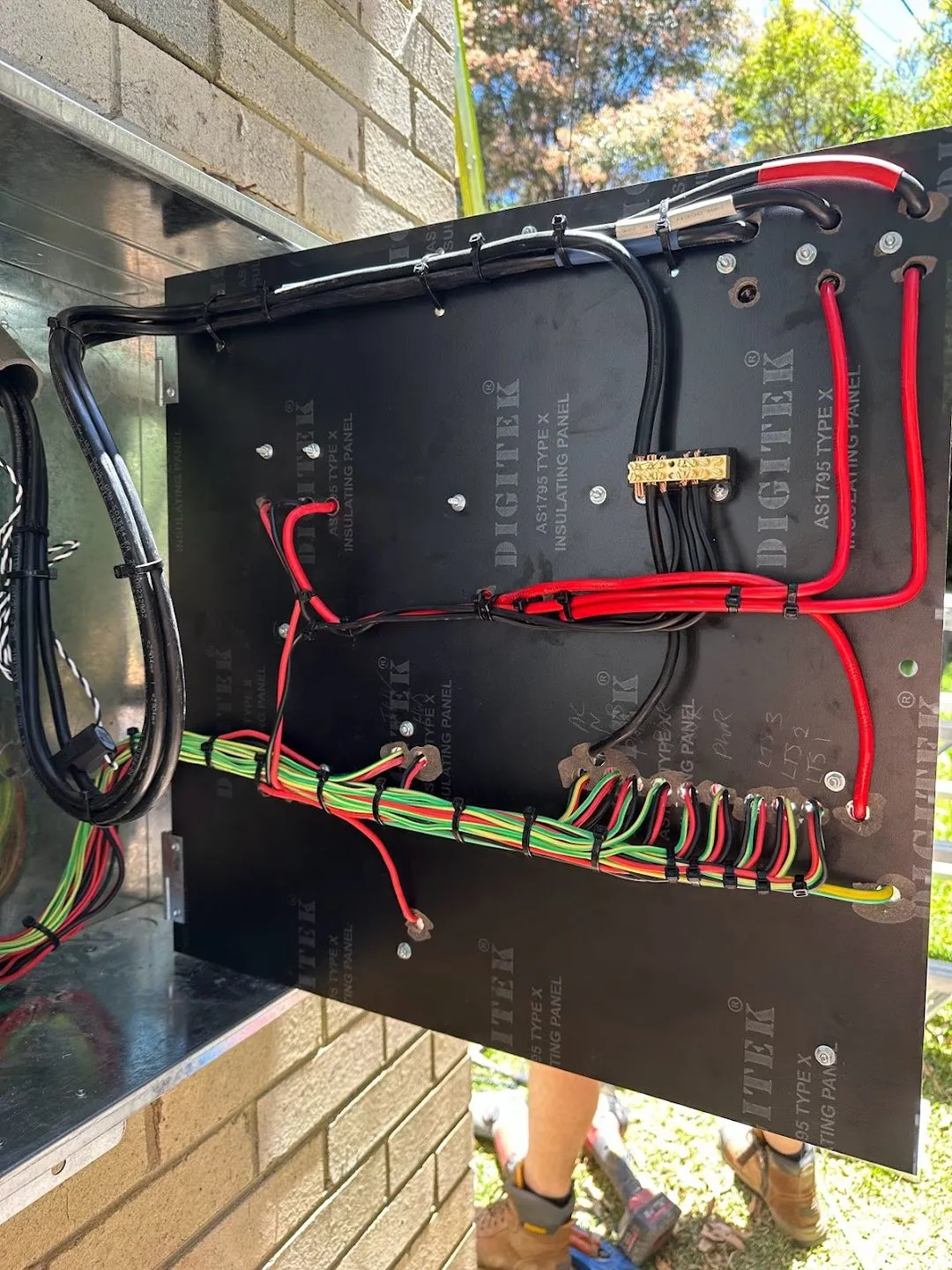
High Demand Electrical is a licensed local team, not a call centre, servicing homes and businesses across Sydney's Inner West and beyond. We assess your existing switchboard capacity, size the dedicated circuit and Type B safety switch correctly for the charger you actually want, and handle the switchboard upgrade in the same visit where one is needed rather than sending you away to book a second job. As an electrician near you in Sydney's Inner West, we have fitted EV charging circuits into enough federation terraces, narrow semis and strata buildings to know exactly where the real capacity constraints usually sit before we even open the switchboard door.
Ready to charge your EV properly at home? Get an EV Charger Installation Quote and we will confirm your switchboard's capacity, the right circuit size and the correct Type B safety switch for your car. Call 0402 808 808. Every job starts with a site assessment, since exact scope and pricing depend on what your existing switchboard can support.
Related reading: our guide to Level 2 electricians in Sydney, and for a property fed from a private power pole, HD Power Pole's guide to EV charger capacity rules.
Powering Your Needs with Expertise
If you want a reliable, experienced, and prompt electrician, High Demand Electrical Inner West is the one to call. We cover every electrical need — routine maintenance, emergency repairs, full system installs — and our team is focused on keeping your setup running smoothly. Small task or big project, give us a ring today.

Licensed Level 2 ASP electricians across the Inner West and Sydney. Same-day service and 24/7 emergency response.
Licence 397193C
ABN 87 051 836 527