Adding New NBN or Phone Cabling in Your Inner West Reno? Here's the Separation Rule From Your Power Circuits
Does new NBN or phone cabling need to stay clear of your power wiring during an Inner West renovation? Yes. AS/NZS 3000 requires a minimum 50mm separation, or a solid barrier, between low voltage power cabling and telecommunications cabling wherever the two sit together on a wall, in a ceiling space or on a surface, and at least 500mm where they share an underground trench, so a terrace renovation adding both new circuits and new data points needs both trades working to the same gap.
⚡ Quick Answers: NBN and Phone Cable Separation From Your Power Wiring
- How far apart should power and NBN cable be on a wall or in the ceiling? At least 50mm, or a solid insulating barrier between the two if that gap isn't available, under AS/NZS 3000 Figure 3.8.
- What about underground, say along a side passage or rear lane? At least 500mm apart in a shared trench, each cable in its own conduit, under Clause 3.9.8.4 and Figure 3.9.
- Can the electrician just run the new NBN cable through the existing power conduit? No. Clause 3.9.8.3 bans mixing a 230 volt power cable and an extra low voltage cable such as telecommunications cabling in the same conduit, duct or multicore cable, outside narrow exceptions.
- Why does this come up so often in Inner West terraces specifically? Narrow blocks, shared side passages and tight roof spaces mean a renovation's new power circuits and new NBN or data points are often fished through the exact same wall cavity or ceiling run.
- Who is responsible for getting the separation right? Your electrician is responsible for the power side of the gap, and your NBN co or phone provider's installer for the telecommunications side, but it's the homeowner who deals with the consequences if nobody coordinates the two.
- Does this apply even if I'm only adding NBN, not touching my switchboard? Yes. The rule applies to new telecommunications cabling run anywhere near existing power wiring, regardless of whether the power side is also being upgraded at the same time.
1. Why This Comes Up So Often in Inner West Terraces and Semis
A lot of Inner West renovation work bundles several trades into one reno: a switchboard upgrade, a few new power circuits for a kitchen or laundry, and a new NBN connection or extra data points for a home office, often all happening in the same roof space or wall cavity within weeks of each other. In a narrow terrace or semi, that roof space or side passage is frequently the only practical route for either cable, which is exactly when the separation rule starts to matter.
It's a genuinely common point of confusion: homeowners assume that because both cables are "low voltage" in a loose sense, they can simply run side by side with no real gap. AS/NZS 3000 treats power and telecommunications cabling as two different classes that need to be kept apart, for reasons that come down to interference and, more importantly, safety if one cable is ever damaged near the other.
2. The Wall and Ceiling Rule: 50mm or a Barrier
Wherever a power cable and a telecommunications cable are concealed together in a wall, run through the same ceiling space or sit on a surface side by side, AS/NZS 3000's Figure 3.8 sets a minimum 50mm separation between them. Where that gap genuinely isn't available, a barrier of durable insulating material or metal placed between the two cables is accepted instead, and running either cable inside its own conduit also satisfies the rule.
This is the figure that matters most in an older terrace's ceiling space, where an electrician fishing a new power circuit and an NBN technician fishing a fibre lead in cable can easily end up working through the same joists within days of each other, often without either one knowing the other's cable is there unless the job is coordinated properly.
3. The Underground Trench Rule: 500mm, and Why Rear Lanes Matter
Where cabling runs underground rather than through the building, such as along a side passage, under a rear lane or across a courtyard to a garage or granny flat, Clause 3.9.8.4 and the standard's Figure 3.9 require at least 500mm separation between a shared power and telecommunications trench, with each cable in its own conduit.
This matters particularly for the Inner West's older terraces fed via a rear lane, a scenario covered in more depth in our guide to private power poles and rear lane overhead reticulation. Where a property's power supply already runs underground through a rear lane or side passage, that's also the most likely route an NBN or phone installer will want to use, which is exactly where the 500mm rule needs to be checked before any new trenching starts.
4. Why Power and Data Cable Can't Simply Share One Conduit
Clause 3.9.8.3 is the rule that actually bans the shortcut most people assume is fine: running a new NBN or phone cable through the same conduit as an existing power circuit because there's visible room inside it. Under the Wiring Rules, a 230 volt cable and an extra low voltage cable such as telecommunications cabling cannot share one conduit, pipe or multicore cable, except in narrow circumstances such as the power cable being double insulated or a properly barriered compartment keeping the two apart within the one enclosure.
In practice, that means a new data point added during a renovation needs its own run, meeting either the 50mm/barrier indoor rule or the 500mm underground rule, rather than being squeezed in alongside an existing power cable because it looks convenient at the time.
5. What This Means if You're Adding Downlights, an EV Charger or a Switchboard Upgrade at the Same Time
Separation matters even more on a renovation that's touching several things at once. Our guides to downlights and ceiling insulation rules and switchboard upgrades for Inner West terraces both cover work that typically happens in the same roof space an NBN cable might already be running through, and our guide to EV charging without a driveway covers the kind of new external circuit that can also end up sharing a trench with telecommunications cabling along a side passage.
The practical lesson across all of these is the same: before any new cable goes in, whether it's power or data, it's worth knowing where the other service already runs, which is exactly the kind of check a properly scoped site assessment picks up before work starts rather than after a cable has already been damaged.
6. Who Actually Manages This: Your Electrician or Your NBN Installer
Your electrician is responsible for the power side of the separation rule and for not creating a non compliant installation on the power circuits they install. NBN Co and most phone and internet providers use their own appointed installers for the telecommunications side, and those installers aren't authorised to touch your switchboard, consumer mains or power circuits at all.
Where the two genuinely need to coordinate on the same job, for example a reno adding both a new circuit and a new data point through the same ceiling space, the simplest fix is to have your electrician confirm the existing cable routes and the required separation before either trade starts fishing a new cable through, rather than discovering the clash once both have already finished for the day.
Why It's Level 2 ASP Work
Most of the power side of this separation question sits with a standard licensed electrician, but where the renovation also touches the service mains, the point of attachment or a switchboard upgrade that changes the main earthing system, that work needs an accredited Level 2 ASP. Our sister site High Demand Electrical Power Pole covers the same separation rule from the private pole side of the fence in its guide to NBN and phone cable separation near a private power pole, which is the Level 2 ASP equivalent of this question for pole fed properties.
How High Demand Electrical Helps
High Demand Electrical is a licensed local team, not a call centre, servicing homes and businesses across the Inner West and surrounding suburbs. When we're on site for a switchboard upgrade, a new circuit or any other renovation work, we check where existing telecommunications cabling runs before fishing anything new through the same wall or roof space, and we're happy to confirm separation and routing for your NBN installer or other trades as part of the same visit rather than leaving it to chance.
NBN and Phone Cable Separation FAQs (Inner West)
Does this rule apply to fibre NBN cable as well as an older copper phone line?
Yes. The separation rule in AS/NZS 3000 covers telecommunications cabling generally, which includes fibre, copper and coaxial cable used for NBN, phone and pay TV services.
My NBN cable and a power circuit already run close together in my ceiling. Is that automatically unsafe?
Not necessarily, but it's worth having checked. If the two are genuinely closer than 50mm with no barrier between them, it's a non compliance that should be corrected, usually by re routing or sleeving one of the cables rather than anything more invasive. See electrical safety inspections for how this kind of issue gets picked up.
Is this the same issue as sharing a switchboard with next door?
No, it's a different question. Our guide to shared switchboards in Inner West semis and terraces covers properties still sharing one switchboard or meter with the neighbour, while this separation rule applies to any property's own power and telecommunications cabling.
Do I need to tell my NBN installer where my power cables run?
It genuinely helps. If your electrician has recently worked in the roof space or wall cavity involved, ask them for a quick note on cable routes before the NBN appointment, so the installer isn't guessing at what's already there.
What if there's a switchboard location issue as well as a cabling separation issue?
Both are worth sorting in the same visit. See our guide to switchboard location rules for older Inner West terraces for the placement side of the compliance picture.
If your renovation is adding new power circuits and new NBN or data cabling at the same time, get a switchboard upgrade quote from High Demand Electrical or call 0402 559 777. Every job needs a site assessment before scope or pricing can be confirmed.
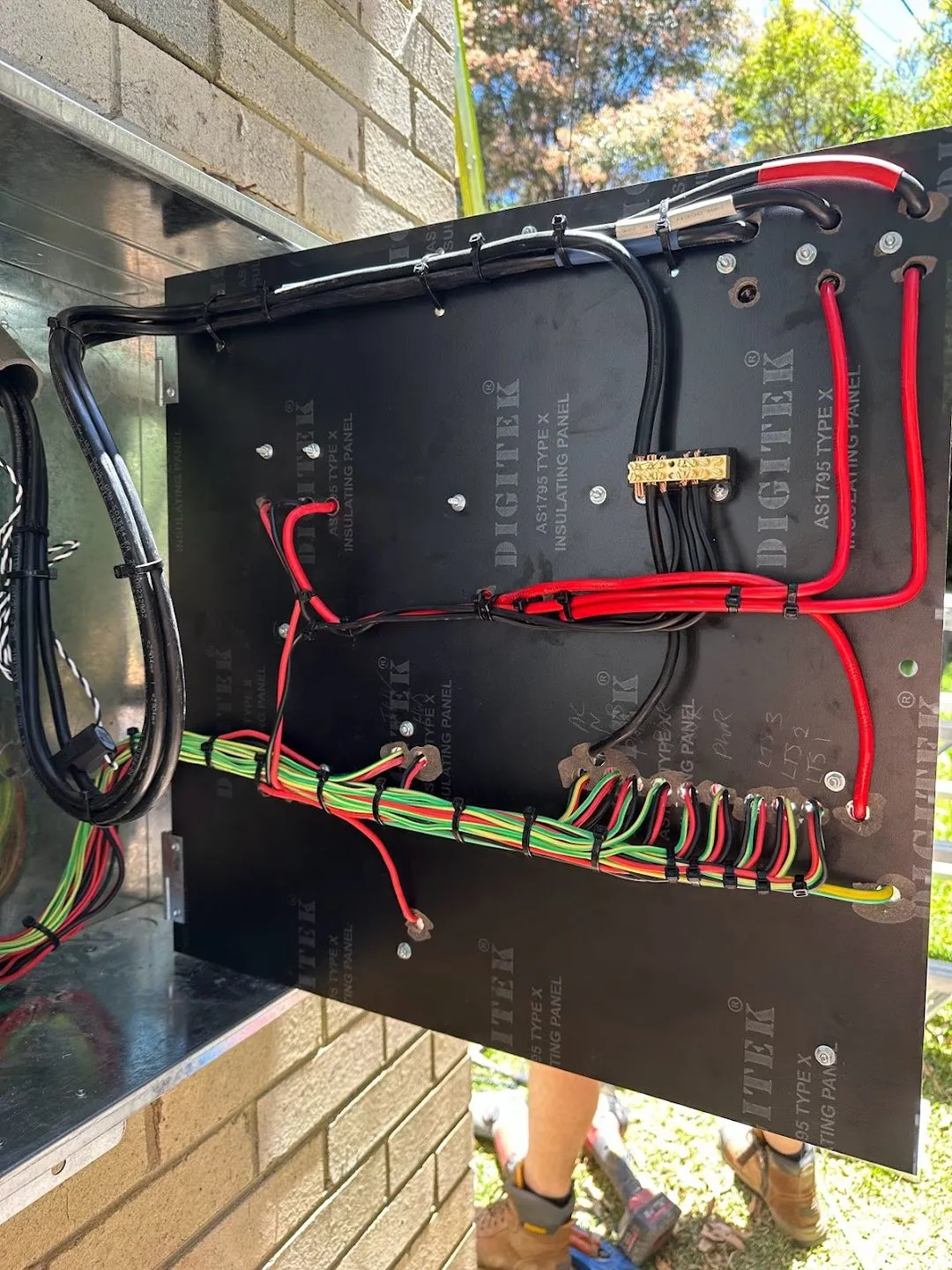
Powering Your Needs with Expertise
If you want a reliable, experienced, and prompt electrician, High Demand Electrical Inner West is the one to call. We cover every electrical need — routine maintenance, emergency repairs, full system installs — and our team is focused on keeping your setup running smoothly. Small task or big project, give us a ring today.