Does Solar on Your Inner West Semi Need a Label on Every Switchboard, Not Just One?
Does solar on your inner west semi need a label on every switchboard, not just the one it connects to? Yes. Under the Service and Installation Rules of NSW, a solar or battery system needs a clear label on the board it connects to, plus a matching label on every switchboard upstream of it, including the main switchboard. Miss the upstream boards and the installation can still fail a compliance check even though the system itself works perfectly.
1. The Rule Behind the Label: SIRNSW Clause 8.7
Clause 8.7 of the Service and Installation Rules of NSW requires the customer to supply and install clear, permanent labelling wherever a solar or battery system is connected. As a minimum, that labelling has to go on two places: the switchboard or distribution board the generation system actually connects to, and every switchboard upstream of it, including the main switchboard.
The labels themselves have to cover six things: that an alternative source of supply exists, which parts of the installation it can supply, where it is controlled from, the conditions under which it may operate, the conditions of connection, and whether a battery is part of the system.
2. Why This Catches Out Older Inner West Terraces and Semis
A single fronted terrace with one switchboard is the simple case. Plenty of inner west properties are not that simple: a semi sharing one supply with next door, a terrace with an added sub board for a rear extension or a converted garage, or a renovation that left an old fuse board in place upstream of a newer one.
Each of those extra boards sits between the street supply and wherever the solar system connects, and Clause 8.7 treats every one of them as needing its own label, not just the board closest to the panels. A property that shares a switchboard with next door needs particular care here, since the labelling has to make clear which property's alternative supply it actually refers to, and the same applies where a shared point of attachment is involved.
3. What the Label Actually Needs to Say
A compliant label is specific, not generic. Rather than a vague sticker that simply says solar installed, SIRNSW expects wording close to this: this switchboard has an alternative source of supply connected, it is a grid connected solar and battery system, it is controlled by the isolating switch at a stated location, and it may only operate while connected to and in synchronism with the network.
On the upstream main switchboard, the label needs to point whoever is isolating supply toward where the generation system is actually controlled, so a network technician or your own electrician isolating the home for other work knows an alternative supply still needs isolating separately.
4. The Main Switch and Shutdown Procedure Sit Alongside the Labelling
Labelling does not stand alone. The same section of SIRNSW requires the generator supply main switch to sit on the same switchboard the generation system connects to, and the installation also needs labelling describing the correct shutdown procedure for the system, referencing the relevant Australian Standard.
Together, these rules mean anyone standing at your switchboard during an outage or before maintenance work can see at a glance that there is a second source of supply, where it is controlled, and how to shut it down safely, rather than relying on them already knowing your home has solar.
5. Why This Matters More With a Battery in the System
Adding a battery changes what the upstream labelling needs to say, since Clause 8.7 specifically requires the label to state whether a storage system is part of the installation. A home with solar alone and a home with solar plus battery storage carry different risks for anyone isolating supply, because a battery can keep circuits live even after the grid connection and the solar array are both switched off.
If you are weighing up a battery without solar or already have both, this is one of the details that is easy to miss when a system is added in stages rather than installed all at once.
6. Retrofitting Labels to an Existing Solar System
If your solar or battery system was installed some years ago, it is worth checking whether the upstream boards actually carry the required labelling, particularly if any switchboard work has happened since, such as a switchboard upgrade or a board being relocated. Labels can be overlooked entirely, removed during other trade work, or simply never extended to a board added after the original solar installation.
This is a straightforward fix once identified, but it still needs to be done properly rather than with a generic sticker, since the wording itself is part of what SIRNSW requires.
Why it's Level 2 ASP work
Connecting a solar or battery system to the grid is Level 2 Accredited Service Provider work in its own right, and the labelling requirement sits inside that same accreditation rather than being a separate add on task. A Level 2 ASP installing or inspecting a solar connection checks the labelling on every affected board as part of the compliance sign off, not just the one nearest the panels.
How High Demand Electrical Inner West helps
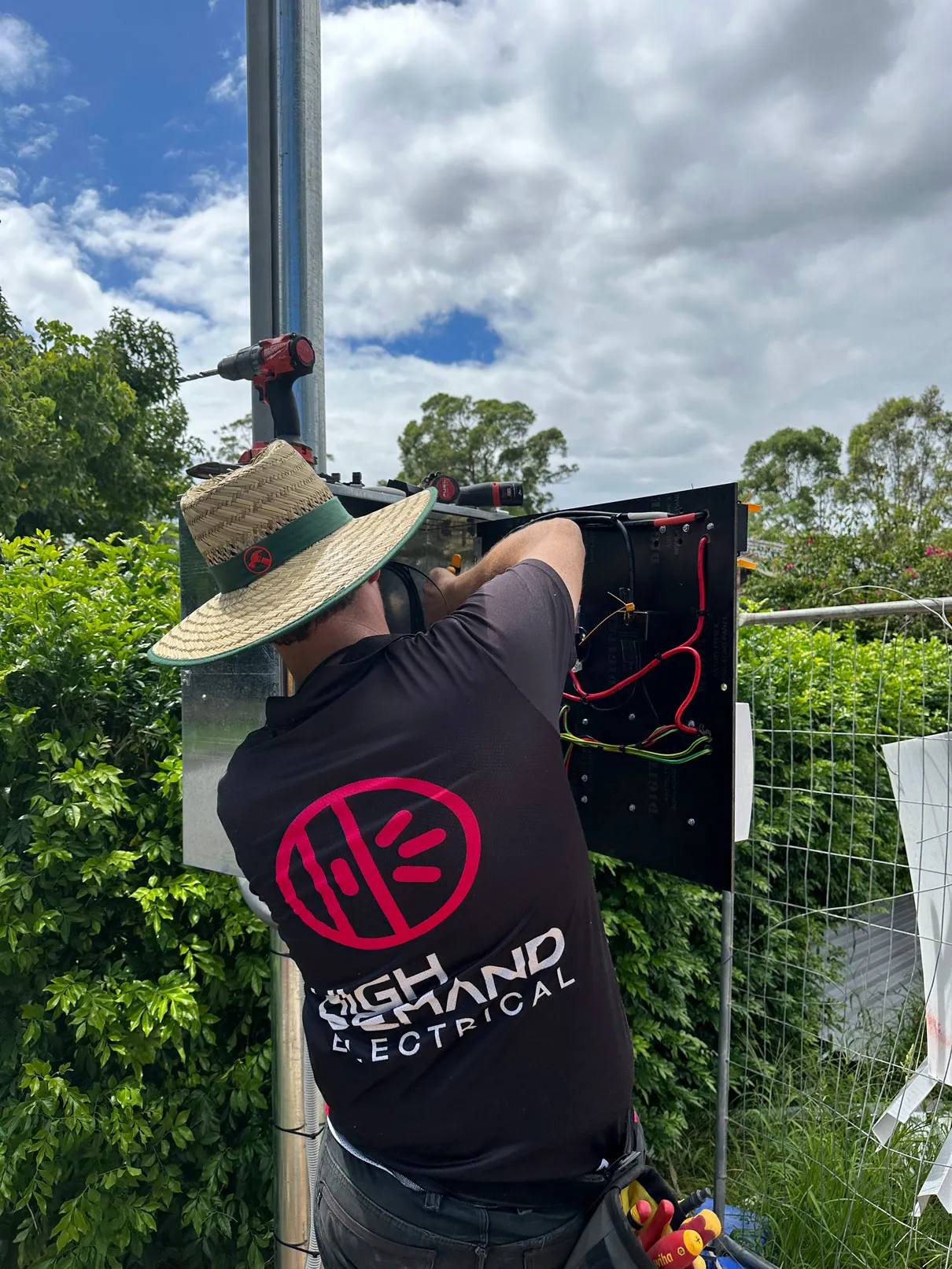
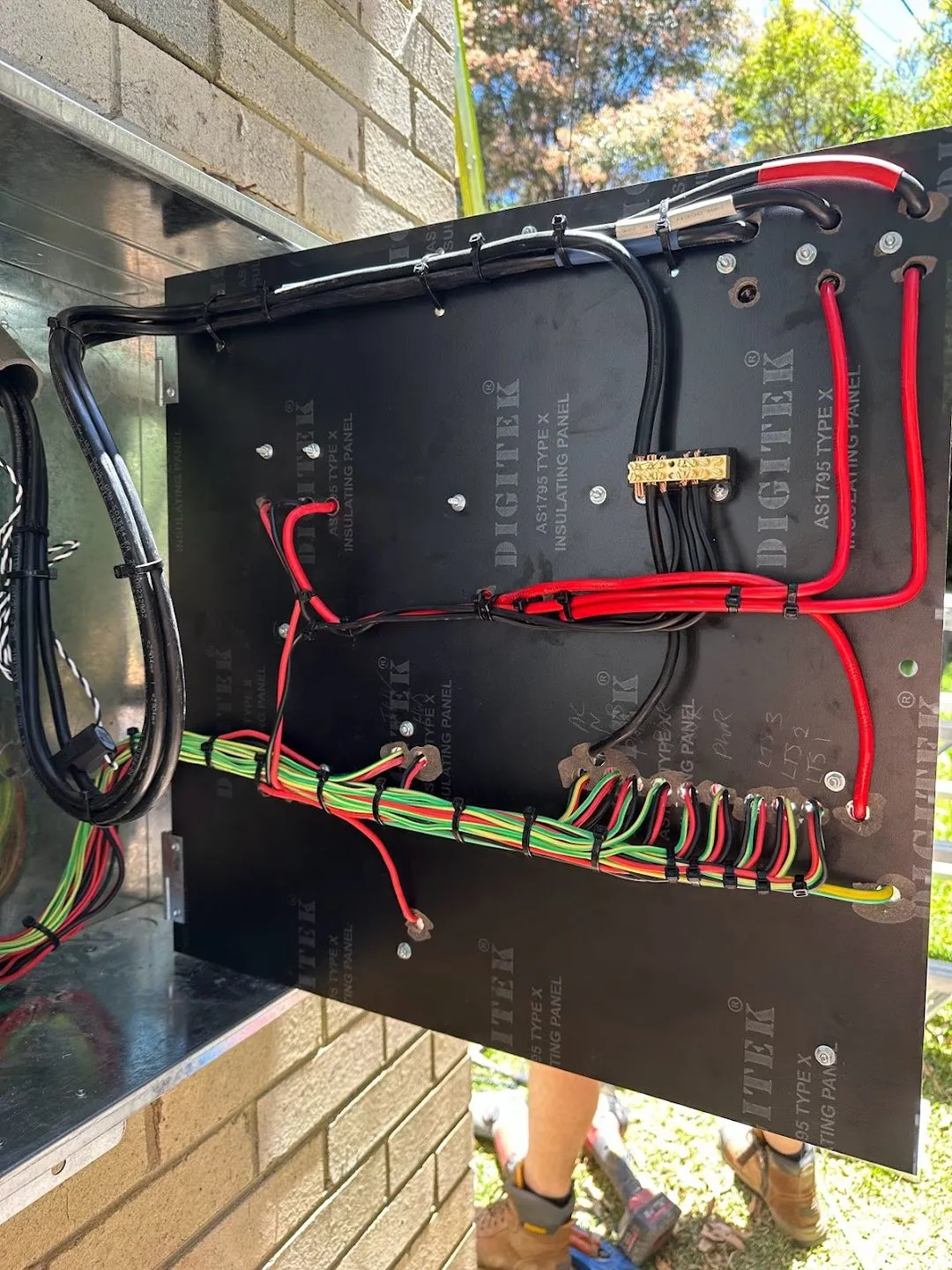
High Demand Electrical is a licensed local team, not a call centre, servicing homes and businesses across Sydney's Inner West alongside the rest of Sydney's West, South West and Sutherland Shire. We are used to the layered, sometimes inherited switchboard arrangements that come with older terraces and semis, where a solar connection can sit two or three boards away from the street supply.
Whether you are planning a new solar or battery installation, or want an existing one checked against the current labelling requirements, we can inspect every switchboard between your point of attachment and your generation system and bring the labelling up to what SIRNSW actually requires. Where a shared switchboard or an all electric switchboard upgrade is also on the table, we look at all of it together rather than as separate jobs.
Inner West Solar Labelling FAQs (Sydney)
Does a small rooftop solar system still need upstream labelling?
Yes. Clause 8.7 does not set a size threshold, so a small residential system needs the same upstream labelling as a larger one.
What if my semi shares a switchboard with next door?
Then the labelling needs to make clear whose alternative supply it refers to, which is one more reason to get a Level 2 ASP to review it rather than guessing. See shared switchboard arrangements.
Can I make my own labels at home?
The label itself can be a simple engraved or printed plate, but the wording has to cover the specific points SIRNSW requires, so a generic solar installed sticker is not enough on its own.
Does adding a battery to existing solar mean relabelling?
Yes, since the upstream label needs to state whether a storage system is part of the installation, which changes once a battery is added to a solar only system.
Who checks this when I get a switchboard upgrade?
A Level 2 ASP carrying out a switchboard upgrade on a property with existing solar or battery should check and, if needed, reinstate the required labelling as part of that job rather than leaving it for a separate visit. See switchboard upgrades.
Get a Switchboard Upgrade Quote
If you want your inner west home's solar or battery labelling checked against what SIRNSW actually requires, or you are planning a new installation, get a switchboard upgrade quote from High Demand Electrical. Call 0402 559 777. Every job needs a site assessment before scope or pricing can be confirmed, since what your switchboards need depends on how many boards sit between your point of attachment and your generation system.
For a private pole specific look at backup power and generation, see HD Power Pole's guide to connecting a backup generator to a private power pole. For general Level 2 ASP background, see our Level 2 electrician Sydney page.
Related Services
Powering Your Needs with Expertise
If you want a reliable, experienced, and prompt electrician, High Demand Electrical Inner West is the one to call. We cover every electrical need — routine maintenance, emergency repairs, full system installs — and our team is focused on keeping your setup running smoothly. Small task or big project, give us a ring today.

Licensed Level 2 ASP electricians across the Inner West and Sydney. Same-day service and 24/7 emergency response.
Licence 397193C
ABN 87 051 836 527