Can Tree Roots Damage the Underground Power Cable to Your Inner West Home?
Can tree roots actually damage the underground power cable running to your inner west home? Yes, over enough years a large established root system can crack or displace the conduit protecting an underground service or consumer mains cable, even when it was installed at the correct depth. It rarely happens overnight, and the fix depends entirely on whether the damaged section sits on the network's side of the connection or on yours.
1. Why this is a real issue across the inner west
Suburbs like Annandale, Haberfield, Leichhardt, Marrickville and Petersham are genuinely leafy by Sydney standards, with mature street trees and established backyard plantings that predate most of the underground services now running beneath them. A large fig, plane tree or established gum can send roots many metres beyond its canopy looking for moisture, and a cable trench is often the easiest path of least resistance through compacted soil. None of this means every underground cable near a tree is at risk, but it does mean the inner west sees this problem more often than newer, more sparsely planted parts of Sydney.
2. How underground cable is supposed to be protected
Underground service and consumer mains cables are not just laid in a trench and covered over. Under Clause 2.4.1.1 of the Service and Installation Rules of NSW, cable under 240mm squared must run the whole length of its route inside UPVC conduit, buried to a minimum depth of 500mm, with orange marker tape positioned roughly halfway up the cover so future digging finds a warning before it finds the cable itself. Done properly, this combination of depth and conduit is genuinely resistant to normal root growth for a long time. The risk grows where the original installation sits shallower than it should, where ground has eroded or been regraded since installation, or where a large root has simply had decades to find and exploit a joint or a weak point in ageing conduit.
3. How root damage actually develops over time
Root related cable damage is almost always a slow process rather than a sudden failure. A root growing against a conduit applies gradual pressure as it thickens year on year, eventually cracking rigid UPVC or crushing it enough to expose the cable inside. Once the conduit's protection is compromised, the cable sheath itself is exposed to moisture, soil movement and further mechanical pressure from the same root or others nearby. This is also why a cable that has survived twenty years near a tree can still fail without warning: the damage has usually been building invisibly below ground for a long time before anything shows up as a symptom at the switchboard.
4. The warning signs you should not ignore
A handful of signs tend to show up before a complete failure. Lights that flicker or dim briefly, particularly when a large appliance starts, can point to a partially damaged conductor rather than a switchboard or appliance fault. A safety switch that trips intermittently with no obvious trigger is worth investigating rather than simply resetting and forgetting. Visibly exposed conduit or cable at the surface, especially near a tree base after rain or garden work, should never be touched or dug around without a professional assessment first. Unusual dieback or a damp, soft strip of lawn directly along a known cable route can also indicate a slow leak of current or moisture ingress at a damaged section.
5. Whose responsibility is it: network side or yours
The distributor, Ausgrid or Endeavour Energy depending on your street (check your network area in seconds with our postcode checker if you are not sure which one covers you), owns and maintains its underground mains up to the connection point serving your property. From that point, the underground service cable and consumer mains running into your home are your responsibility as the owner, the same split that applies to an overhead private pole and line. If a tree on your own property has damaged your underground service or consumer mains, the repair and any associated trenching is a cost you wear, usually through a licensed electrician or, where the service cable itself is involved, a Level 2 ASP. If the suspected damage is closer to the street or clearly on the network's own infrastructure, the right first call is the distributor directly.
6. What a repair or reroute actually involves
Any suspected underground fault starts with a proper fault location and a Dial Before You Dig search for every utility in the area, not just the cable in question, before any excavation begins. Depending on what is found, the fix might be a straightforward cable replacement along the same route once the offending root is dealt with, or a full reroute around the root system if removing enough of it to protect the repair would damage the tree significantly. Where a reroute or full replacement is needed anyway, it is often the right moment to reassess whether the cable's current size and route still suit your home's actual load, particularly if you are also planning a renovation, a new subboard, or additional circuits. Our guide to converting an overhead connection to underground in the inner west and our separate look at overhead versus underground power for inner west homes both cover the broader decision making if you are weighing up a full reconnection rather than a like for like repair.
7. Preventing it during a renovation or new underground run
If you are planning a new underground service, a consumer mains upgrade, or converting an existing overhead connection as part of a renovation, the cable route is worth planning around established trees from the outset rather than as an afterthought. Routing further from large root zones where practical, confirming the conduit and depth genuinely meet the current rules rather than matching whatever was there before, and keeping a basic record of the route for future reference all reduce the risk of a repeat problem years down the track. This is exactly the kind of detail a proper switchboard and supply assessment picks up early, before a trench is dug in the wrong place, and it is worth raising alongside any planned underground service mains work rather than after the fact.
Why it's Level 2 ASP work
Any fault, repair or reroute on the service cable itself, the section running from the network's underground mains to your property's connection point, falls to a Level 2 Accredited Service Provider rather than a standard electrician, because it involves the live network side of the connection. Work on your consumer mains from the connection point into your switchboard can generally be carried out by a licensed electrician, but where the two are close together or the exact boundary is unclear, we assess and confirm this on site before any digging starts.
Related guides: Does a long cable run to your renovation need thicker cable?, What happens to your solar when the power goes out? and Switchboard upgrades for Inner West terraces.
How High Demand Electrical Inner West Helps
High Demand Electrical is a licensed local team, not a call centre, servicing terraces, semis and period homes across the inner west's leafier streets, where established trees and ageing underground services turn up together more often than most homeowners expect. When we investigate a suspected underground fault, we start with a proper locate and a Dial Before You Dig search rather than guessing where to dig, confirm whether the damage sits on your side of the connection or the network's, and scope a repair or reroute that protects both your supply and, where it is reasonably possible, the tree itself.
Worried a tree might be affecting your underground power supply? Get a Power Supply Assessment Quote from High Demand Electrical Inner West, or call 0402 559 777. Every job starts with a proper locate and site assessment before any scope or pricing is confirmed.
Related Services
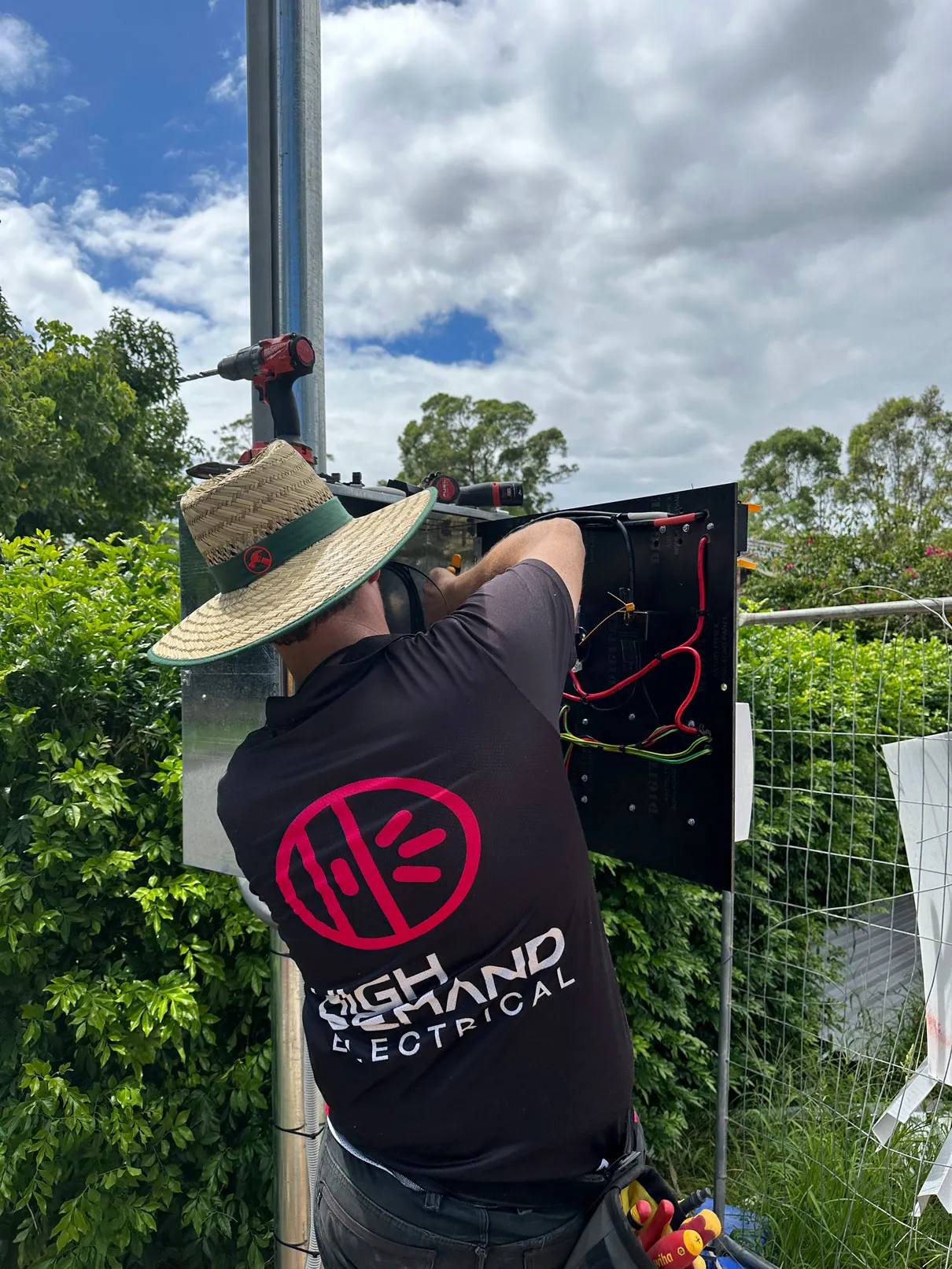

Powering Your Needs with Expertise
If you want a reliable, experienced, and prompt electrician, High Demand Electrical Inner West is the one to call. We cover every electrical need — routine maintenance, emergency repairs, full system installs — and our team is focused on keeping your setup running smoothly. Small task or big project, give us a ring today.

Licensed Level 2 ASP electricians across the Inner West and Sydney. Same-day service and 24/7 emergency response.
Licence 397193C
ABN 87 051 836 527