What Happens to Your Solar When the Power Goes Out? Battery Backup and Blackout Circuits for Inner West Homes
Does your solar system keep your inner west home powered when the street goes dark? For almost every grid connected solar system in Sydney, the answer is no. The inverter is required to shut itself off within seconds of a blackout, and it stays off until mains power returns, regardless of how sunny it is or how much charge sits in a battery. Real backup power during an outage needs a specific setup on top of ordinary solar, not solar alone.
1. Why grid connected solar shuts off in a blackout
Every inverter connected to the grid in New South Wales must include anti islanding protection. If mains supply is disrupted, the inverter has to detect that within seconds and automatically disconnect, stopping both AC and DC power from reaching the grid side of the connection.
This exists for a simple safety reason. Network crews treat a line as dead once the street supply is switched off, and a solar system quietly continuing to feed that line would put anyone working on it at real risk. The same protection applies whether your system has a battery or not, which is why solar alone, battery included, does not automatically mean backup power.
2. What a true backup system actually needs
Backup power during an outage needs three things working together: a battery with enough stored charge, an inverter rated for backup or islanding mode rather than a standard grid tied inverter, and an automatic transfer mechanism that isolates your backup circuits from the grid connection the instant mains power drops out.
Not every battery or inverter combination supports this. Some batteries are designed purely to shift your own solar generation into the evening to cut your bill, with no backup function at all. If backup matters to you, it needs to be specified before you buy, not assumed because a battery is in the system.
3. The critical loads panel: a physically separate board
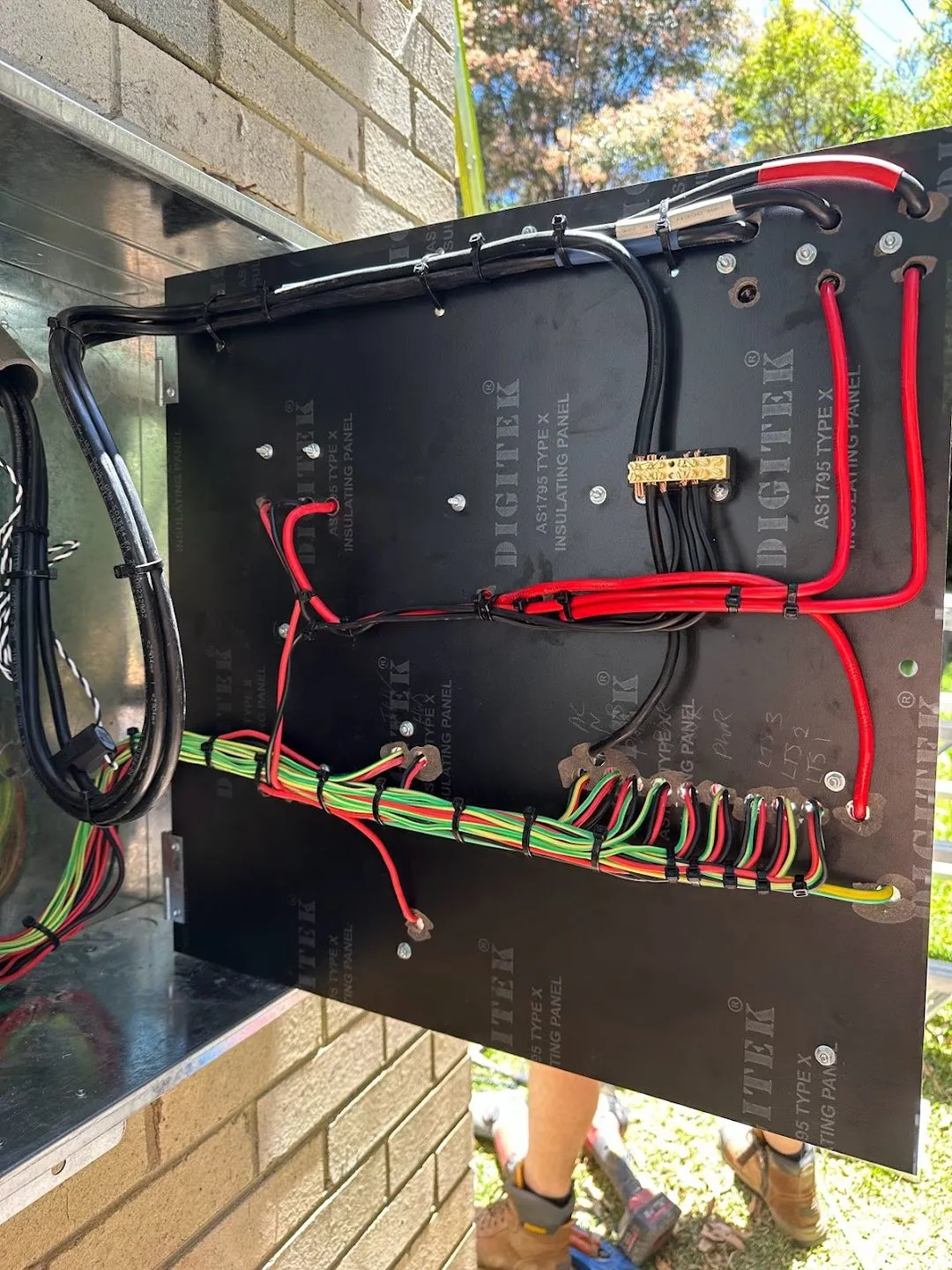
The part of a backup system most people have not seen is the critical loads panel, sometimes called a backup board or essential circuits board. This is a small, separate distribution board wired only to the circuits you have chosen to keep running, physically isolated from the rest of your main switchboard during an outage.
That physical separation is what allows the system to safely island itself from the grid. Without it, there is no reliable way to guarantee the backup supply cannot find its way back onto the network side of your connection, which is exactly what anti islanding protection exists to prevent.
4. What a typical inner west system can realistically back up
Inner west terraces generally have smaller, more constrained roofs than a standard suburban block, which tends to mean a smaller solar array and a smaller battery than you would see on a larger western Sydney home. That has a direct effect on what backup can cover.
In practice, a modest battery sized for a terrace roof will usually cover the fridge, some lighting circuits, the NBN or modem, and a handful of general power points, for a period measured in hours rather than days. Ducted air conditioning, an induction cooktop, an electric oven and most heating are rarely included, simply because the loads are too large for a backup system of that size to carry for any useful length of time.
5. Retrofitting backup versus planning it in from day one
Adding backup to an existing solar system is possible in many cases, but it usually means more work than adding backup to a brand new installation. A retrofit can involve replacing an inverter that was never built for islanding, finding physical space on an already full switchboard for a new critical loads panel, and rewiring the selected circuits so they can be isolated cleanly.
If you are planning solar or a power supply upgrade and backup matters to you, raising it at the design stage is far cheaper than retrofitting later, particularly on an older terrace where switchboard space is already tight.
6. Approval, metering and cost factors
A backup capable system still has to meet the same distributor approval and metering requirements as any other solar or battery installation, since the generation source must stay isolated until the right metering is in place and the whole system is approved in writing before connection. Which distributor applies, Ausgrid or Endeavour Energy, can affect how that approval is handled, so it is worth taking a moment to check your network area in seconds with our postcode checker before you start planning.
Cost wise, the backup inverter, the critical loads panel and the extra wiring and labour to isolate your chosen circuits all sit on top of a standard solar and battery quote. The exact figure depends on how many circuits you want backed up and how much rework your existing switchboard needs, which is why this is always priced after a proper site assessment rather than a flat add on fee.
Why it's Level 2 ASP work
Anything that touches your point of connection, your metering, or the main switchboard itself needs a Level 2 Accredited Service Provider, and a backup capable solar retrofit almost always touches at least one of those. A standard electrician can wire the loads inside a critical loads panel, but connecting that panel into the switchboard at the point where it interacts with your service and metering is Level 2 territory.
Related guides: Could your terrace’s old meter board contain asbestos?, Can tree roots damage your underground power cable? and Does your Inner West home need CT metering?.
How High Demand Electrical Inner West helps
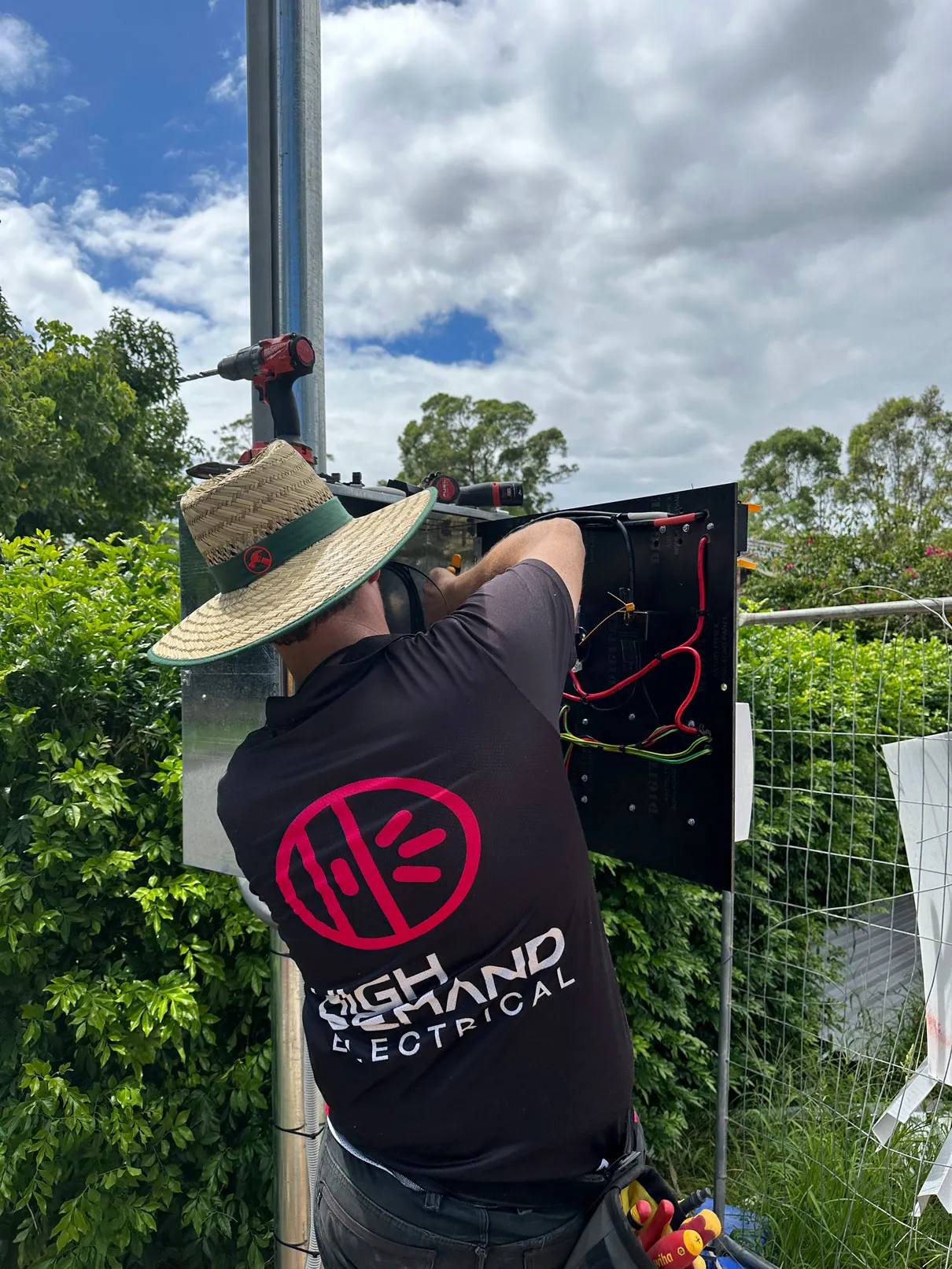
High Demand Electrical is a licensed local team, not a call centre, servicing homes and businesses across Sydney's Inner West alongside the rest of Sydney's West, South West and Sutherland Shire. We are used to the tighter switchboard space and smaller roof footprints that come with terraces and semis, and we size backup systems around what a property can genuinely support rather than a generic package.
If you already have solar on an inner west terrace roof and want to know whether backup can be added, or you are planning a new system and want backup built in from the start, we can assess your existing switchboard, inverter and roof space, and scope the critical loads panel and wiring your home would actually need. Where surge protection or an all electric switchboard upgrade is also on the cards, we look at all of it together rather than as separate jobs.
Get a Switchboard Upgrade Quote
If you want to know whether your inner west home can support real backup power during an outage, get a switchboard upgrade quote from High Demand Electrical. Call 0402 559 777. Every backup and solar job needs a site assessment before scope or pricing can be confirmed, since what your home can safely back up depends on your existing switchboard, inverter and roof.
For a private pole specific look at backup power, see HD Power Pole's guide to connecting a backup generator to a private power pole. For general Level 2 ASP background, see the main site's Level 2 electrician Sydney guide.
Related Services

Powering Your Needs with Expertise
If you want a reliable, experienced, and prompt electrician, High Demand Electrical Inner West is the one to call. We cover every electrical need — routine maintenance, emergency repairs, full system installs — and our team is focused on keeping your setup running smoothly. Small task or big project, give us a ring today.

Licensed Level 2 ASP electricians across the Inner West and Sydney. Same-day service and 24/7 emergency response.
Licence 397193C
ABN 87 051 836 527