Where Does Your Backup Generator's Main Switch Have to Be on an Inner West Switchboard?
Where does a backup generator's main switch actually have to go on an Inner West home? It has to sit on the same switchboard the generator connects to, not tucked away in a shed or garage where it was easiest to run a cable. The Service and Installation Rules of NSW set this out specifically so anyone isolating the switchboard in an emergency can also isolate the generator at the same place, and the installation has to carry clear labelling describing how to shut the system down properly.
1. What Clause 8.6.16 Actually Requires
The Service and Installation Rules of NSW deal with standby and backup generators in a dedicated section covering alternative sources of supply. Clause 8.6.16 is short and direct: the generator supply main switch must be located on the switchboard at which the generation source is connected. In practice, that means the switch you use to isolate the generator from the rest of your home's wiring has to live on the same board as the changeover equipment, not somewhere more convenient like beside the generator itself in a shed or garage.
The reasoning is straightforward. If someone needs to isolate your home's supply in an emergency, whether that is a tradesperson, an emergency service, or you, they need to be able to isolate the generator at the same time and the same place, rather than hunting through the property for a second switch somewhere else.
2. Why This Switch Location Rule Exists
Standby generators are only allowed to connect to a home's wiring through interlocked changeover switchgear that physically prevents the generator and the grid supply being connected at the same time, the break before make arrangement covered in Power Pole's guide to backup generator connections on a private power pole. That changeover equipment needs to sit at or adjacent to the switchboard it serves, and the generator main switch follows the same logic for the same safety reason.
Scattering isolation points across a property makes it harder, not easier, to make a home safe during a fault, a fire, or a flood. Keeping the generator's main switch on the main switchboard means one location tells the whole story about what is connected and how to shut it down.
3. The Separate Shutdown Labelling Requirement
A related rule in the same part of the Service and Installation Rules of NSW adds a second requirement. The installation must carry labelling describing the correct shut down procedure for the generator, in accordance with the relevant Australian Standard, typically AS/NZS 3010 for generating sets. This is not the same as the broader solar and battery labelling we cover in our guide to switchboard labelling for solar and battery systems. That earlier post deals with the general rule that every switchboard fed by an alternative supply needs a permanent label stating that an alternative supply exists. The shutdown procedure label goes further for a generator specifically, it needs to actually describe the steps to shut the system down safely, not just flag that it is there.
For an Inner West terrace or semi with a second switchboard for an extension or a granny flat, both the switch location rule and the shutdown labelling need to be considered at whichever board the generator actually connects to, which is not always the original front of house board.
4. What This Looks Like in Practice on a Terrace or Semi
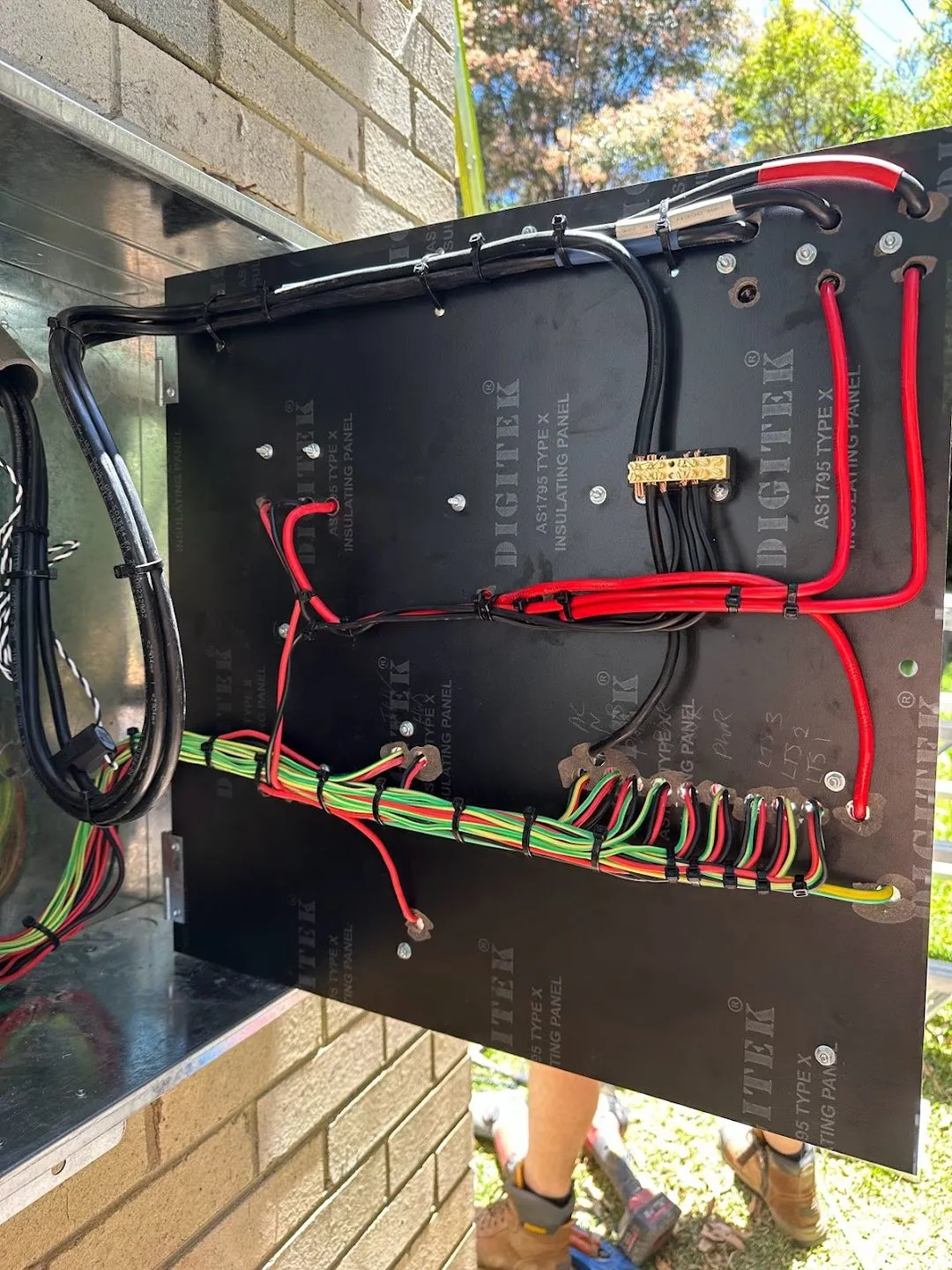
Picture a standby generator installed in a side passage or rear yard of an inner west terrace, wired in to cover the fridge, lighting and a few essential circuits during a blackout. The temptation is to put a simple isolating switch right next to the generator itself, since that is where the cable naturally terminates. Under Clause 8.6.16, that switch on its own is not enough, the generator supply main switch still has to be on the switchboard, with the changeover gear, even if an additional local isolator also exists next to the generator for convenience.
On a semi detached property sharing one point of attachment with next door, this also means being clear about which switchboard the generator is actually feeding, since a shared supply arrangement can make the "same switchboard" answer less obvious than it looks.
5. How This Sits Alongside Battery Backup and Solar
Many Inner West homes now combine solar, a battery, and in some cases a backup generator for genuine blackout resilience. Our guide to battery backup and blackout circuits covers how a critical loads panel and islanding work for solar and battery systems during an outage. A standby generator sitting alongside that setup still has to meet its own switch location and labelling rules under the switch location rule and the related shutdown labelling requirement, on top of whatever the solar and battery system already requires elsewhere on the board.
The practical effect is that a home running solar, battery and a backup generator together can end up with several labels and switches on or near the main switchboard. That is by design, not clutter, each one exists so a different person in a different emergency can work out quickly what they are dealing with.
6. Getting the Changeover Equipment Right at the Same Time
The switch location and labelling rules do not exist in isolation from the rest of the generator installation. The changeover switchgear itself has to be interlocked so the generator and grid supply can never be connected together, and the switchboard needs enough capacity and space to accommodate the extra equipment properly rather than being squeezed in around existing circuits. An older switchboard on a terrace that has not been touched in decades is often the real constraint on where a compliant generator connection can actually go.
If a storm or an outage is what is prompting the backup generator conversation in the first place, our guide to storm damage and your home's electrical system covers the broader picture of what else is worth checking after severe weather, beyond the generator question alone.
7. What Happens if the Rule Is Ignored
A generator main switch fitted somewhere other than the switchboard it connects to, or a system with no shutdown labelling, will not pass inspection and will not be signed off by a Level 2 ASP as compliant. Beyond the paperwork, the real risk is practical, in a genuine emergency the people trying to make your home safe need to find the right switch quickly, and a non compliant layout works against that every time it actually matters.
Why It's Level 2 ASP Work
Connecting a standby generator to a home's wiring, including the changeover switchgear, the generator supply main switch and its labelling, is Level 2 accredited work under the Service and Installation Rules of NSW. Confirm the current requirements with your Level 2 ASP before a generator installation is finalised, since the right switchboard location can depend on how your particular property is wired and where any earlier solar or battery work has already used up board space.
How High Demand Electrical Helps
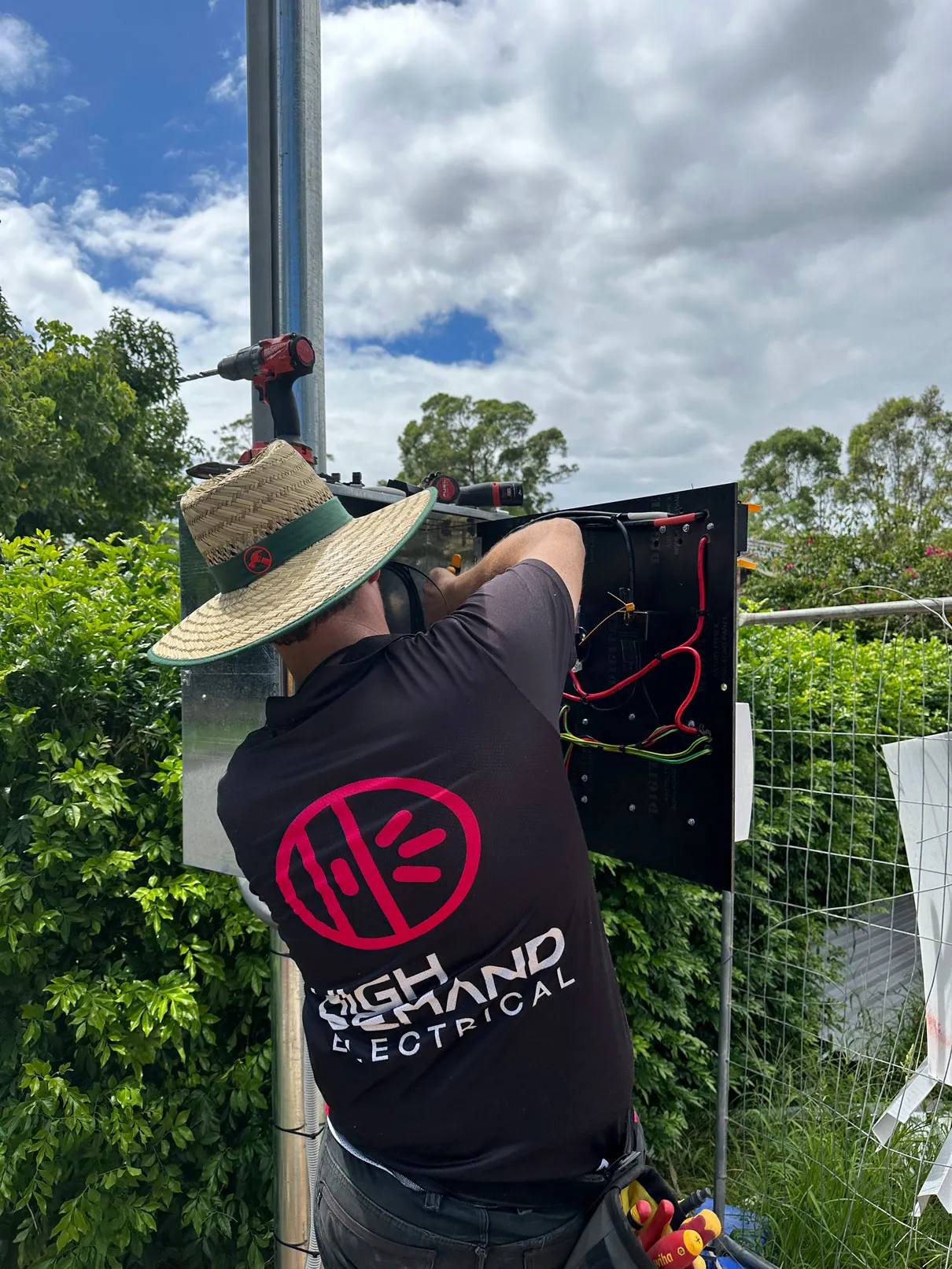
High Demand Electrical is one of Sydney's most trusted Level 2 ASPs for backup power work, and we treat the switch location and labelling rules as part of getting a generator installation right the first time, not an afterthought once the generator is already wired in. During a site assessment we look at your existing switchboard, any solar or battery system already installed, and where the generator realistically needs to connect, then plan the changeover gear and labelling around that.
We service Inner West terraces and semis, along with homes and businesses across Sydney's West, South West and Sutherland Shire, and we would rather tell you upfront that your switchboard needs upgrading to fit a compliant generator connection than sign off on something that will not hold up to an inspection or, worse, will not help you in the blackout it was installed for.
Get a Power Supply Upgrade Quote
If you are planning a backup generator for your Inner West home and want it connected correctly from the start, get a power supply upgrade quote from High Demand Electrical. Call 0402 559 777. Every job needs a site assessment before scope or pricing can be confirmed, since the right switchboard layout depends on your existing wiring and any solar or battery system already in place.
For the Power Pole perspective on standby generators connecting through a private pole, see HD Power Pole's guide to backup generator connections. For general Level 2 ASP background across Sydney, see the main site's Level 2 electrician Sydney page.
Related Services
Powering Your Needs with Expertise
If you want a reliable, experienced, and prompt electrician, High Demand Electrical Inner West is the one to call. We cover every electrical need — routine maintenance, emergency repairs, full system installs — and our team is focused on keeping your setup running smoothly. Small task or big project, give us a ring today.

Licensed Level 2 ASP electricians across the Inner West and Sydney. Same-day service and 24/7 emergency response.
Licence 397193C
ABN 87 051 836 527