What Does Your Inner West Solar Inverter's Automatic Disconnection Device Actually Have to Do?
What does your solar inverter's automatic disconnection device actually have to do? It has to isolate your inverter from the grid the moment the power goes out or the supply drifts outside safe limits, and AS 4777.2 sets hard construction rules for how it does that, not just how fast. It is the piece of hardware standing between your rooftop system and a live line that network crews believe is dead, so it is worth understanding what it is actually built to do.
Most explanations of solar safety in the Inner West stop at "it switches off in a blackout." That is true, but it skips the part that actually earns the trust: the device itself has to meet specific construction rules under AS 4777.2, separate from the voltage and frequency trip points we have already covered. Here is what those rules require, and why they matter for an older terrace or semi with a smaller, more crowded switchboard.
⚡ Quick Answers: Solar Automatic Disconnection Devices (Inner West)
- What is the automatic disconnection device? It is the device, inside the inverter or as a separate unit, that physically isolates your solar or battery system from the grid whenever the supply is disrupted or drifts outside safe limits.
- Is it the same thing as the anti islanding protection? No. Anti islanding decides when to disconnect; the automatic disconnection device is the physical hardware that actually carries out the disconnection, and AS 4777.2 sets separate construction rules for it.
- Can a semiconductor switch be used for isolation? No. AS 4777.2 specifically bans using a semiconductor, or solid state, device on its own for the isolation function.
- Does it need to disconnect every live conductor? Yes, it has to isolate all live conductors, active and neutral, between the inverter and the grid connection point.
- What happens if a single fault occurs inside the device itself? The standard requires the design to still prevent power entering the grid even with one internal fault present, which is why some systems use two independent disconnection devices in series.
- Who checks this on an Inner West installation? Your installer and inspector check it as part of standard commissioning; see our electrical safety inspections for how an existing system gets reviewed.
1. Disconnection is a construction requirement, not just a trip setting
Our earlier guide to what happens to your solar system when the power goes out covers the voltage and frequency windows that decide when an inverter has to disconnect. AS 4777.2 Clause 4.2 covers something different again: the physical device doing the disconnecting, and the specific construction standards it has to meet regardless of what triggered it.
This distinction matters because a system can have perfectly correct trip settings and still fail compliance if the hardware carrying out the disconnection is not built to the standard's requirements. Clause 4.2 is the part of AS 4777.2 that treats the automatic disconnection device as a safety critical component in its own right, not just a relay triggered by software.
2. Every live conductor has to be isolated, properly
The automatic disconnection device must isolate all live conductors, active and neutral, between your inverter and the grid interactive connection point. It also has to be designed so it cannot falsely indicate the contacts are open when they are not, and so it cannot close unintentionally from an impact, vibration or similar disturbance, which matters on a terrace roof exposed to wind and the occasional tradesperson's footstep near the inverter cabling.
The device also has to be rated to withstand a genuine impulse voltage event with an adequate contact gap, and it has to be capable of interrupting at least the inverter's rated current. None of this is left to the installer's judgement on the day. It is part of what the inverter and its disconnection device are type tested against before either ever reaches an Inner West roof.
3. Why a semiconductor switch alone is never acceptable
AS 4777.2 is explicit that a semiconductor, or solid state, device cannot be used on its own for the isolation function. A semiconductor switch can fail in a way that still allows current through even when it appears to be open, which defeats the entire purpose of isolating the system from a line that network crews or your own electrician may be treating as dead.
Where an inverter uses a semiconductor device as part of its internal circuitry, it still has to be paired with a genuine mechanical disconnection device to satisfy this rule. This is one of the details that separates a compliant, properly engineered inverter installation from one that simply "seems to switch off fine" during a quick test.
4. The single fault rule: why some systems use two devices
AS 4777.2 requires that if a single fault occurs anywhere in the automatic disconnection device, or elsewhere in the inverter, basic insulation or simple separation must still be maintained between the solar side and the grid side while the device is meant to be open, and power must still be prevented from entering the grid. For a non isolated inverter, this is commonly achieved with two mechanical disconnection devices in series on each live conductor, controlled by two independent control circuits.
In practice this means the isolation you are relying on is not resting on a single component working perfectly forever. It is engineered with redundancy in mind, which is also why mixing and matching an inverter with an aftermarket disconnection device from a different manufacturer is not something AS 4777.2 allows without the combination being tested together.
5. How this sits alongside export limiting and labelling
If your system also uses export limiting, see our export limiting and zero export guide for how that separate requirement interacts with your inverter's settings. The automatic disconnection device still has to meet its own construction rules regardless of whether export limiting is active, since the two requirements protect against different risks, one against backfeeding a faulted or disconnected grid, the other against overloading the local network under normal conditions.
It is also worth checking our solar and battery switchboard labelling guide, since the labelling requirement exists precisely so that anyone working on your switchboard, including an electrician unfamiliar with your system, knows an alternative supply exists before they rely on the disconnection device having already done its job.
6. Why this matters more on an older Inner West terrace
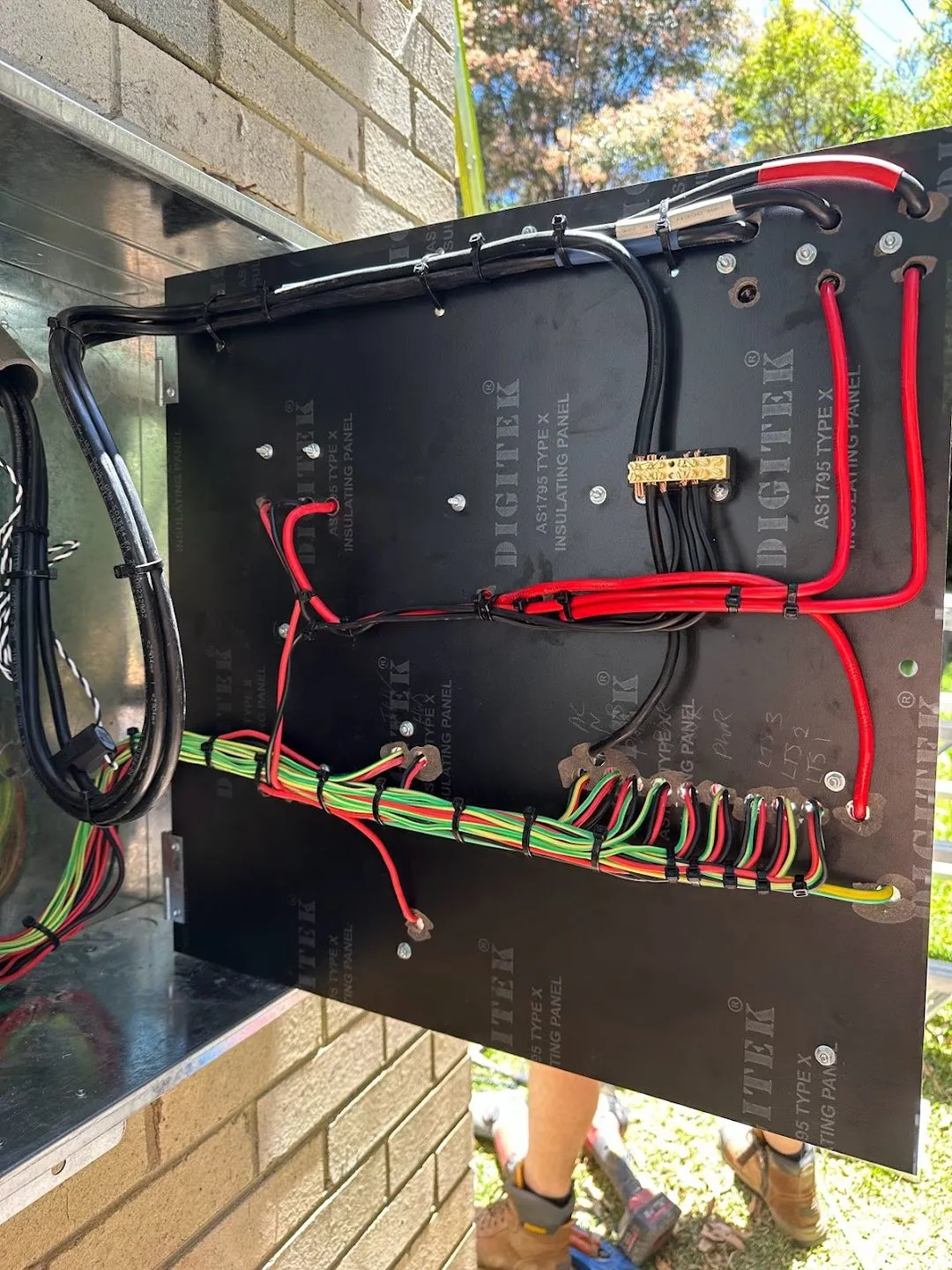
A lot of Inner West terraces and semis are adding solar to a switchboard that was never designed with a second power source in mind, often in a tight meter cupboard with limited room for extra isolation hardware. Confirming the automatic disconnection device is genuinely compliant, not just present, is part of making sure that constrained upgrade still meets the same safety standard as a brand new build. It is also worth reviewing alongside your solar panel earthing and bonding, since both requirements are about the system behaving safely the moment something goes wrong, not just while everything is working normally.
How High Demand Electrical Helps
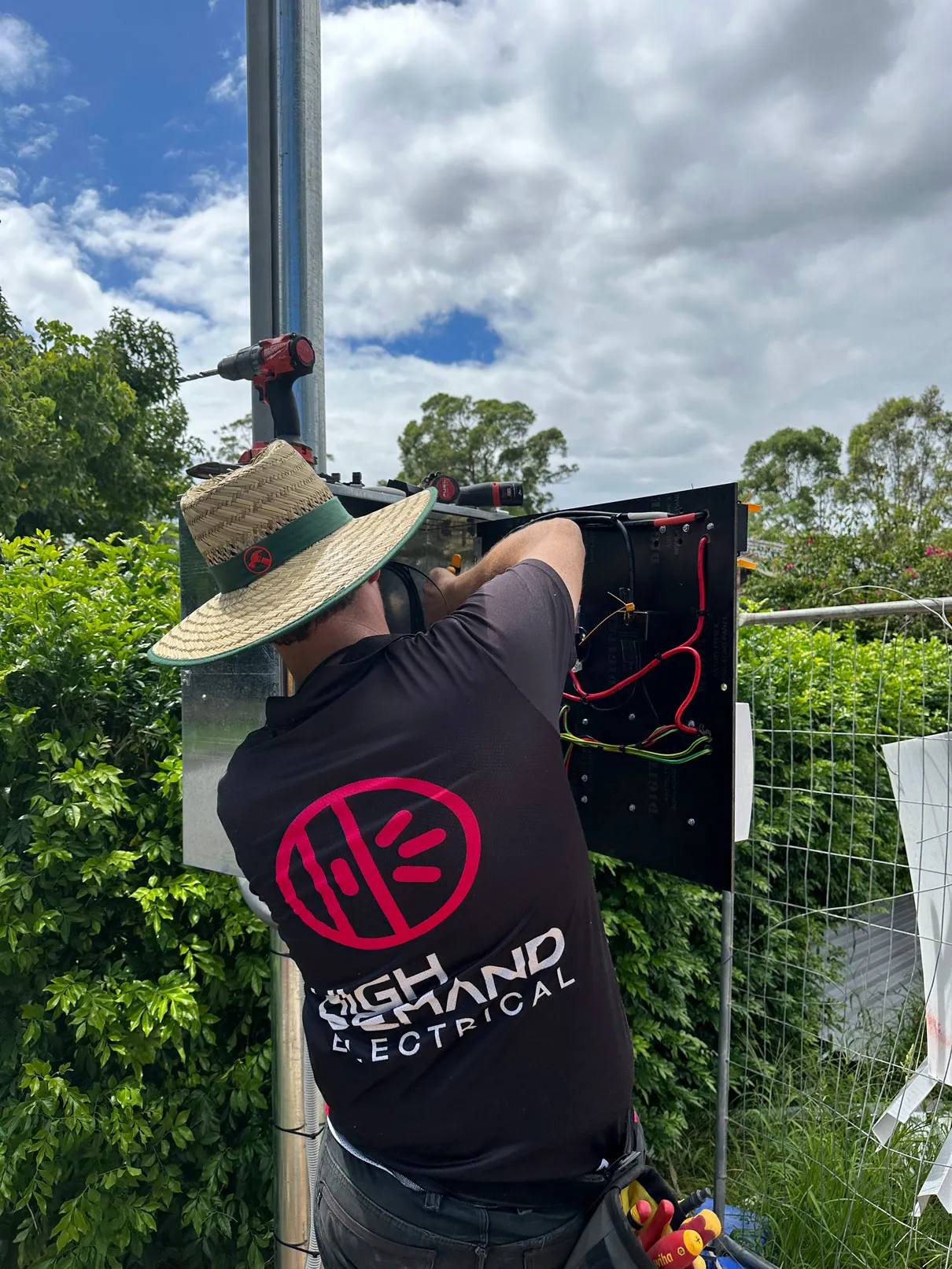
We are a licensed local team, not a call centre, and every solar and battery connection we commission across the Inner West is checked against AS 4777.2's construction requirements for the automatic disconnection device, not just its trip settings. If you are adding solar to an older terrace or semi, or you are not sure whether an existing system's isolation hardware is genuinely compliant, our team can inspect it as part of a proper switchboard upgrade or standalone safety inspection.
Automatic Disconnection Device FAQs (Sydney)
Is the automatic disconnection device the same as my main switch?
No. Your main switch is a manual isolator for the whole installation. The automatic disconnection device is specific to the inverter's connection to the grid and operates automatically under the conditions AS 4777.2 defines.
Can I check whether my inverter's disconnection device is compliant myself?
Not reliably. Compliance is established through type testing of the specific inverter and disconnection device combination, so this is one to leave to a licensed inspection rather than a visual check. See our electrical safety inspections page.
Does a battery system need its own disconnection device as well?
Battery inverters are covered by the same AS 4777.2 requirements as solar inverters for their grid connected port, so yes, the same construction rules apply.
What happens if my inverter and disconnection device were never tested together?
The standard is explicit that testing one combination of inverter and disconnection device does not verify a different combination, so mixing components without proper testing is a compliance risk worth having checked.
Does this affect my single phase to three phase upgrade if I already have solar?
It can. A phase change affects how the inverter and its disconnection device connect to the installation, so this is worth raising with your electrician at the same time as any supply upgrade.
Get Your Solar System Checked Properly
Get a switchboard upgrade quote from a licensed Inner West team who check your solar inverter's automatic disconnection device as part of the job, not as an afterthought. Call 0402 559 777. Every job needs a site assessment before scope or pricing is confirmed.
For how this compares to generator changeover switching on a pole fed property, see HD Power Pole's solar and voltage rise guide, and High Demand Electrical's main Level 2 electrician Sydney page for broader ASP services.
Related Services
Powering Your Needs with Expertise
If you want a reliable, experienced, and prompt electrician, High Demand Electrical Inner West is the one to call. We cover every electrical need — routine maintenance, emergency repairs, full system installs — and our team is focused on keeping your setup running smoothly. Small task or big project, give us a ring today.

Licensed Level 2 ASP electricians across the Inner West and Sydney. Same-day service and 24/7 emergency response.
Licence 397193C
ABN 87 051 836 527